
Category: Management
Expediting Capital Project Completion Through Root Cause Identification
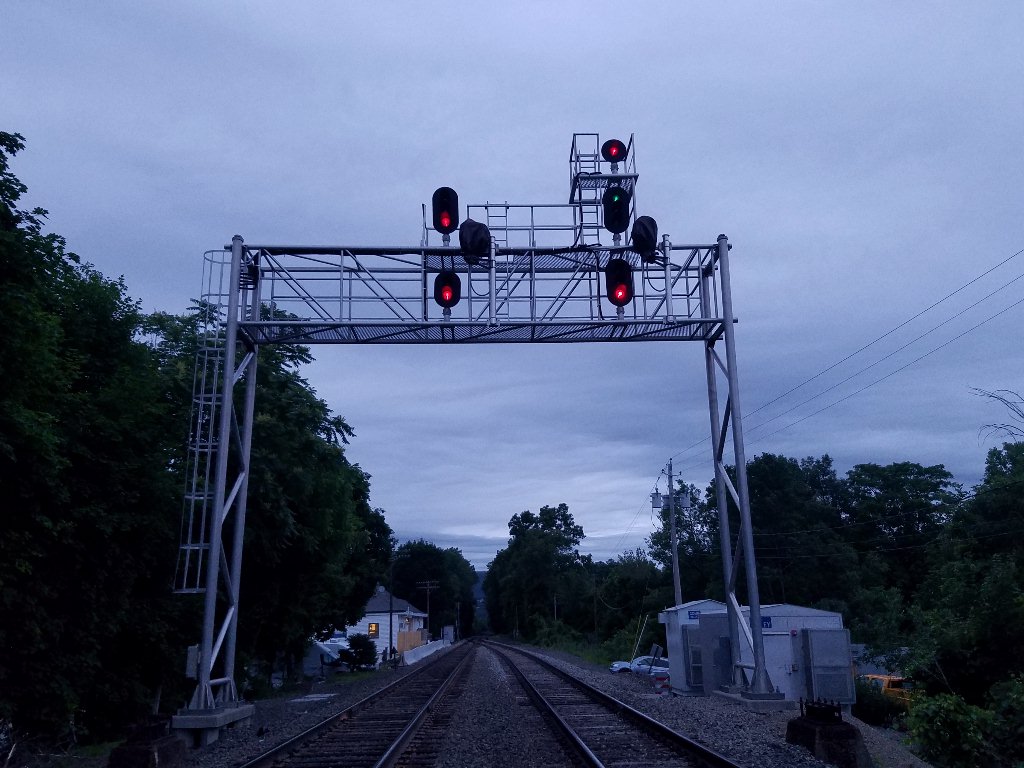 On behalf of a major commuter railway, we performed a systematic study to discover the root causes of project schedule delays associated with three major Capital Projects: upgrade of a wayside signal system on an entire line, installation of passenger area cameras in a locomotive-hauled fleet, and renewal of all overhead line equipment for catenary electrification in one area. In this project, we worked on-site directly with craft personnel responsible for the work, as well as their foremen and managers, to understand their concerns with the work process, project plan, support environment, and resource assignments. For the signal project, delays were attributed to front-loaded project task sequencing, low priority assigned during the early phases, and inspection issues involving contractors, all resolved by work resequencing and more detailed project progress tracking and reporting. In the camera project, the diversity of coaching stock designs and accumulated modifications were issues, requiring multiple prototypes and steep learning curves, which were resolved with instituting periodic technical project meetings and adding more engineering staff. The catenary electrification renewal project was delayed due to contractor personnel shortage and insufficient work windows, which required the most complex solution—involving planning regular mid-week work windows and re-prioritizing more disruptive upgrade work to the weekend when longer track outages were available. In all three cases, the project managers committed to more aggressive completion schedules based on their own process improvements, resource reallocation, as well as our recommendations.
Related Publications/Presentations:
Enterprise Geographic Information Systems (GIS) Program Development
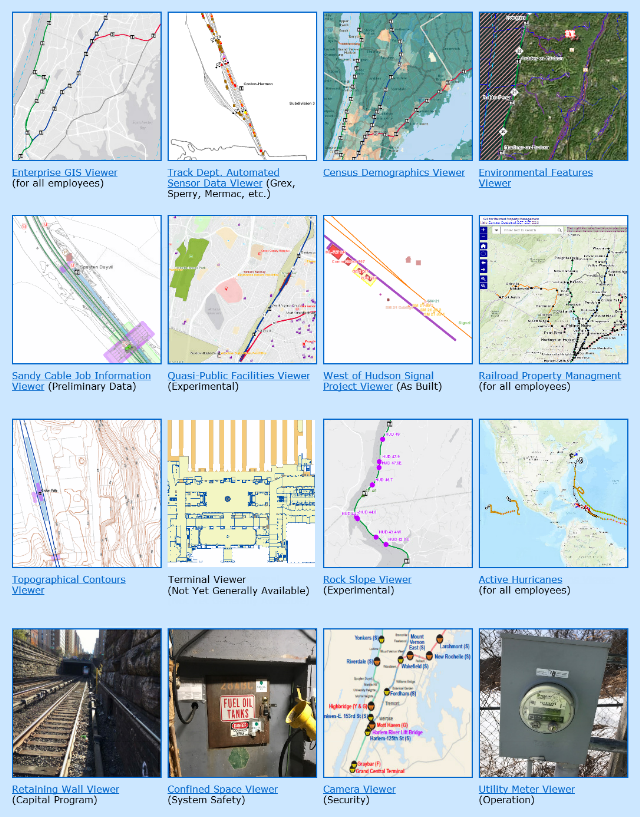 At a major regional railway, we were responsible for developing staffing, organizational structure, and business plans necessary to initiate a companywide Enterprise Geographic Information Systems (GIS) program. We implemented corporate GIS standards, boilerplates, policies, and procedures, and managed the initial bootstrapping phases of the new program, ensuring that necessary I.T. and other resources were secured. We convened an interdisciplinary team of staffers and consultants to develop a concept of operations plan to advance GIS and asset management data collection efforts, and to identify internal mapping and tracking needs that are not currently being fulfilled. This project gathered, imported, and published basic geospatial and infrastructure data (i.e. base map) to fulfill stated business and analytical needs of all departments throughout the railroad. Additionally we scoped out five supporting application development projects, provided their functional specifications, and designed new business processes required to support the elicited user requirements of a number of key railroad departments. The GIS applications included: a property management tool, an electronic track chart, a capital program drawings indexing and retrieval tool, a real-time train-tracking tool for use by field customer service agents, and a planning tool for visualizing travel patterns and traveller demographics. These five GIS applications were progressed through the operating budget justification process, which helped secure $3.8m of Enterprise Asset Management (EAM) funding.
Related Publications/Presentations:
- Geographic Information System Concept of Operations as a First Step Toward Total Enterprise Asset Management
- Enterprise GIS in a Commuter Rail Environment: State-of-Practice at a Major Northeastern Carrier
Track and Power Outage Planning Process Review
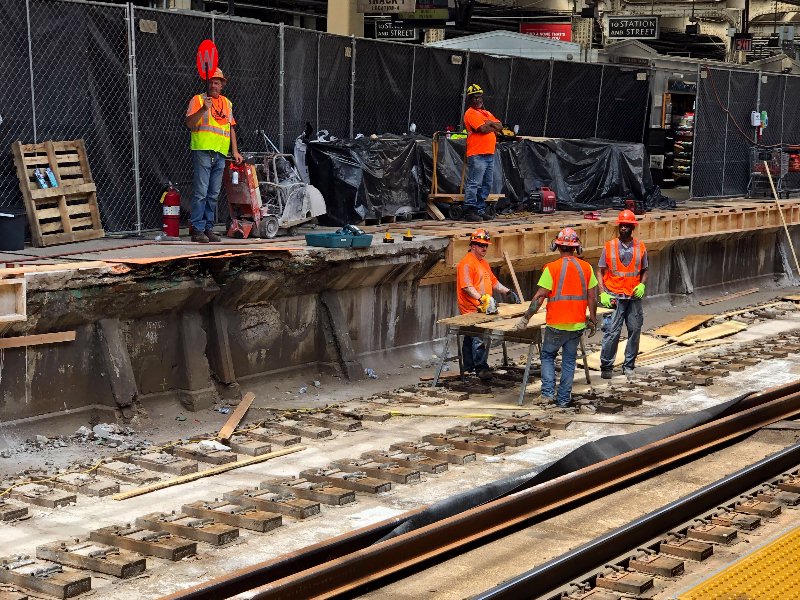
For a major commuter railroad, we were tasked to review the processes utilized in planning for, and resolving conflicts inherent in, track outages required for routine maintenance work and major capital projects. The remit also included a review of software tools that could be utilized, scheduling techniques that could provide longer windows of outage opportunities, and benchmarking with other passenger rail operators to identify possible improvements. We attended many track outage coordination meetings and concluded generally that existing processes were effective as long as participants had the necessary level of operations/construction knowledge, sufficient information about the (maintenance and capital) work to be accomplished, good understanding of their own resource requirements and availability, and properly communicate this information succinctly. Although other rail operators utilized web-based software for more detailed advance planning or had a more regimented process that reduced possibilities of errors or misunderstandings, they also forfeit some flexibility our client had available in terms of responding to short-term changes of plan due to e.g. last minute resourcing or weather-related issues. The scheduling rules for outage request/approvals, and base schedules when work was likely to occur, were written as to generally avoid having to issue a revised or special public timetable to accommodate any reasonably foreseeable work, which preserves operational flexibility for both maintenance work scope changes and in case of train delays due to incidents. However, we recommended that special schedules should be issued to accommodate major projects, as to improve the bandwidth available for project work and reduce both the instances of outages required and overall project costs. As a follow-up, we were tasked to review the power outage planning process within the context of accelerating a major investment programme; our findings were broadly similar, and their implementation resulted in faster rate of progress in the project.
Point-to-Point Running Time and Schedule Accuracy Analysis
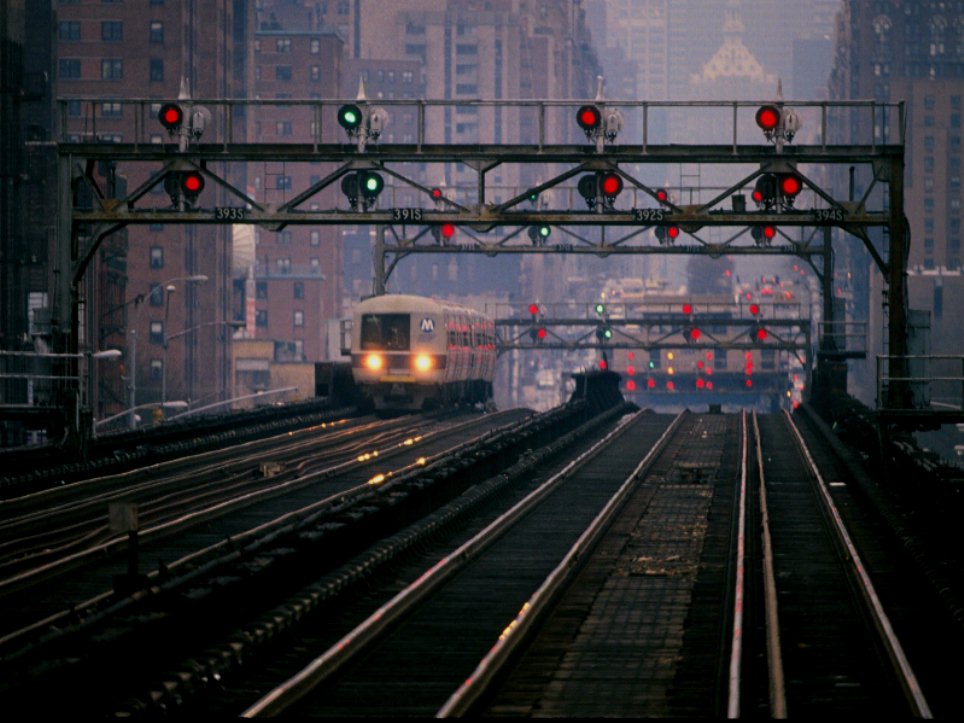 One major Northeastern passenger railroad had a period during late 2013 when train running times between interlocking control points were changing on a weekly basis due to moving infrastructure upgrade and maintenance projects. We were responsible for the near real-time analysis of track circuit occupancy data from train tracker software to determine whether sufficient running time was being provided in the operating schedules to ensure reliable operation and accurate arrival time predictions. We informed the train scheduling process by provide a scientific basis for running time adjustments by developing lateness, running time, variability, and delay cause analysis, and provided heat-map visualizations for senior management.
Related Publications/Presentations:
Organizational Development of Innovative Functions
 For a number of railway organizations, we were responsible for either developing a brand new team to perform a specific function that had hitherto not been performed in-house, or for reviewing an existing group that has had its regular function and responsibilities transformed so fundamentally that a new organizational structure was needed for it to be effective. In one case, we took a unit that had various data-related responsibilities such as surveying, reporting, datamining, big data analytics, regulatory compliance, and quantitative model development, and reorganized it such that the routine data production activities were separated from the research and development activities, and from the I.T. support functions that provided the computer infrastructure on top of which all of those activities took place. For another group, we designed the decentralized organization that would together support the enterprise geographic information system (GIS) by recommending that a small core companywide GIS group was supplemented by designated representatives (both existing and new staff) embedded within various other functional units that would offer the more specialized skills required within their department (e.g. land surveying, demographic analysis, engineering, archiving) but also serve as liaison to the central unit. In another case, we developed an industrial engineering and resource review function from scratch. We also worked on an organization plan that distributed certain compliance responsibilities to subject matter experts within the appropriate areas with one manager serving as overall coordinator. In many of these cases, our organizational plan was implemented, usually with minor modifications, by the business. In one last case, we were tasked with documenting the workflow, roles and responsibilities, and business processes of an existing organization with many ad-hoc and miscellaneous tasks in a detailed and defensible way, to forestall efforts by outside forces to dismantle the unit. We ultimately contributed to their success in preventing that team from being broken up, and helped others achieve a better understanding of that group.
Measuring and Controlling Subway Fare Evasion
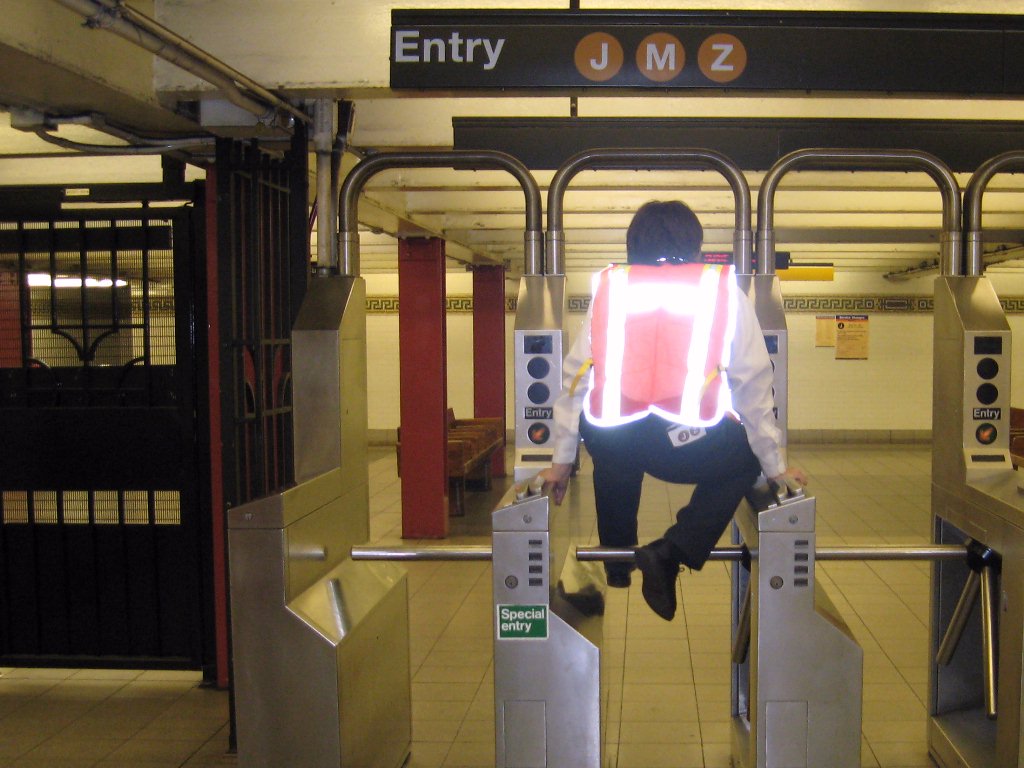 We were tasked by a major U.S. rapid transit system to determine the true rate of fare evasion at the turnstile, and assess the resulting potential revenue loss. Working in conjunction with a team of internal auditors, we adopted a stratified sampling methodology and developed methods for discreet (although not completely clandestine) observations at subway fare control areas. During this project, we discovered that the system in fact had a comprehensive pre-existing framework for managing and combating fare evasion, although it did not report any reliable statistics. The Automated Fare Collection (AFC) system actually features lessons learned from field trials of prototypes specifically designed to limit fare abuse. We found at that time the annual average subway evasion rate remained relatively low at approximately 1.3%, although there were distinct patterns by time of day, type of fare control, rider demographics, and geography. Evasion rate peaks at 3pm due to students dismissal, otherwise hovers around 0.9% peak, 1.9% off-peak. Busy times and locations have higher evasions per hour but lower evasions per passenger. More evasions occur in lower-income neighbourhoods. Staff presence apparently doesn’t reduce evasions. Perhaps counterintuitively, we recommended that fare evasion enforcement should focus on high volume stations and time-of-day to maximize deterrent effect. The transit agency implemented a continuing program to monitor the true rate of fare evasion following this audit, and addressed issues relating to fare structure, probability of enforcement action, versus fixed-penalty fines.
Related Publications/Presentations:
Workload Study for a Critical Railway Supervisory Function
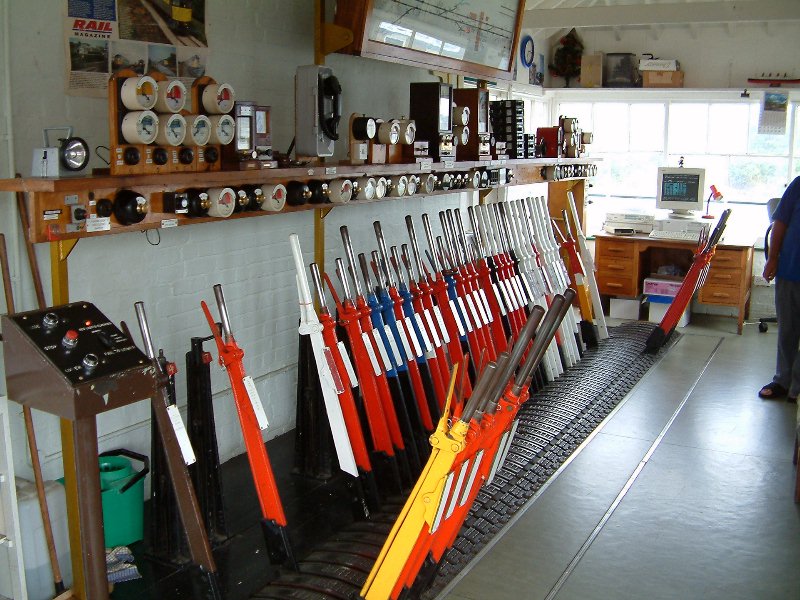
On behalf of a large metro operator, we designed a time-and-motion study using statistical sampling methodologies to determine the typical residual workload of certain field supervisors whose primary train dispatching function had been “remoted” to a centralized control center. To properly understand their workflow, we met with control center managers and reviewed their operating rules to understand their function. We also met with supervisor representatives at their work locations to ensure we capture all of the exception tasks they perform on a day-to-day basis, and factored these unusual circumstances into our study design. A team of operations managers then performed field observations on a 24/7 basis over the course of two months based on our statistical sample. Our study showed that the field supervisors, although they were actively utilized only around 30% of the time, on average several times each shift, they perform a task that could not reasonably have been performed by the train crew, which would otherwise have required a roving supervisor to be sent from another location. We also found that they fulfilled an important safety function by determining fitness-for-duty at train crew signing-on points. As a result of our study, the operations management proactively identified 40 existing messenger positions, whose function could be replaced with internal mail service, which resulted in equivalent headcount reductions.
International Metro Benchmarking on Governance Frameworks
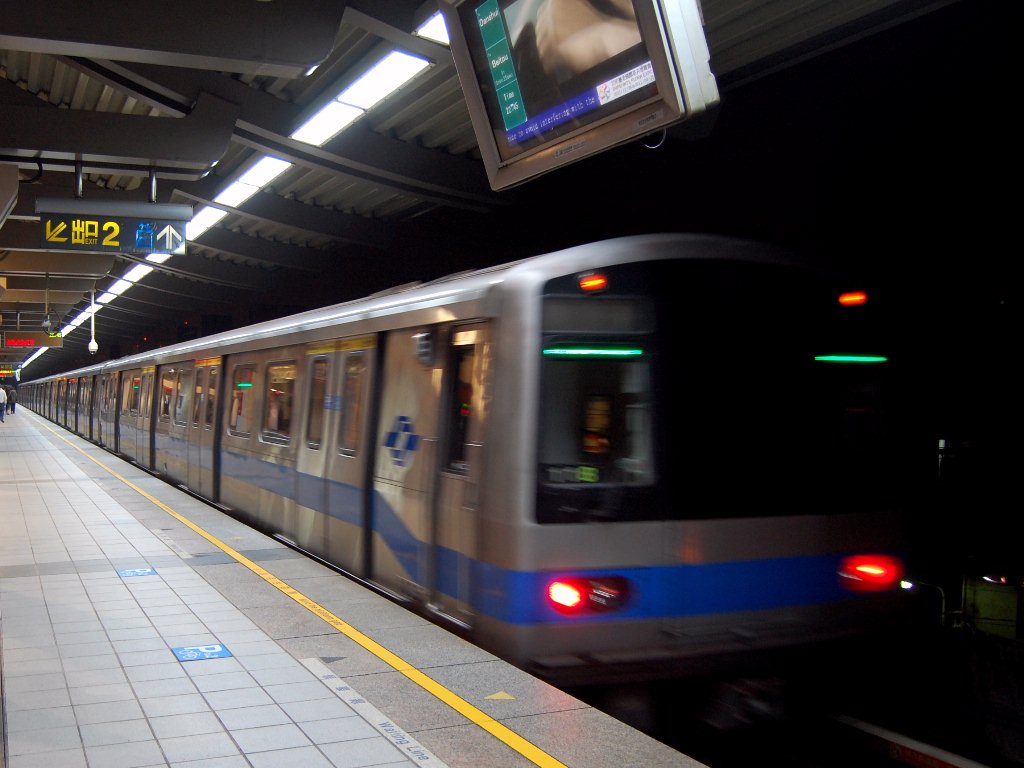 As a spin-off of a national research and training program, we were tasked to determine through publicly available information why many South East Asian transit properties visited by the program delegation have reportedly positive cash flows, i.e. are “profitable”. We found through a detailed comparative analysis of demand densities, asset utilization, regulatory frameworks, performance regimes, operating practices, and softer cultural factors that in fact only the “prudent commercial” portion of the Hong Kong Mass Transit Railway were profitable in the purest sense where farebox revenues exceeded operating expense plus the long term cost of capital renewal. In other cities, the operators are more akin to concessioned carriers or management contractors where at least some infrastructure costs were separated from the operating entity using a variety of financial devices. These systems also received various real estate grants in transactions reminiscent of U.S. “land grant” railroads and have more autonomy and commercial freedom to develop their transit-oriented property holdings. Large metro systems in the U.S. had made network design choices with consequences in density and utilization, which explain some of the higher productivities observed in Asia. We conclude that direct comparisons in performance, profitability, and productivity should be avoided unless care is taken to analyze impacts of governance, social contexts, design criteria, and reasons for these differences. Nonetheless, we believe benchmarking exercises can yield valuable insights for operations improvement under prevailing local constraints.
Related Publications/Presentations:
Shared Use of Railroad Infrastructure: Practical Field Research
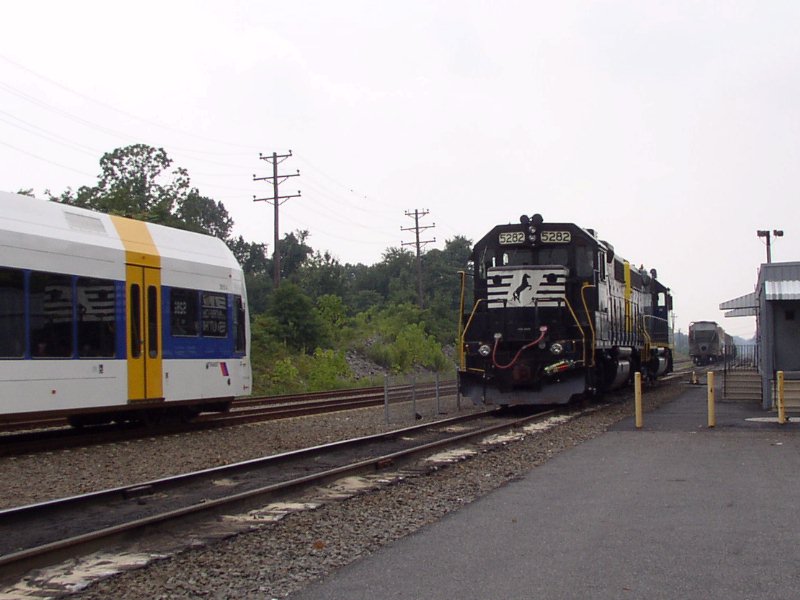 For a national transit research program, we were responsible for researching and writing a report on the shared use of railroad infrastructure by non-compliant light rail vehicles. At that time, the use of Federal Railroad Administration (FRA) waivers for operating light rail cars on general system of railroads was in its nascent years, and the concept of temporal or spatial separation was still in development. As part of this project, we visited a number of properties that have existing waivers. Through interviews with stakeholders, technical specialists, and transit managers, we determined the essential elements and conditions that allowed the system to operate safely and likely receive FRA waiver approval. We identified suitable train control technologies, their performance, costs, and operational impacts. We also determined common procedural and regulatory approaches, and methods for costsharing, staffing, and emergency recovery.
Related Publications/Presentations:
- Shared Use of Railroad Infrastructure with Noncompliant Public Transit Rail Vehicles: A Practitioner’s Guide
- Business Model for Commingled Operations of Freight and Non-FRA-Compliant Passenger Rail Services
Note: Alex Lu performed this work as an employee of another firm.
Critical Incident Response in Rail Control Centers: Research
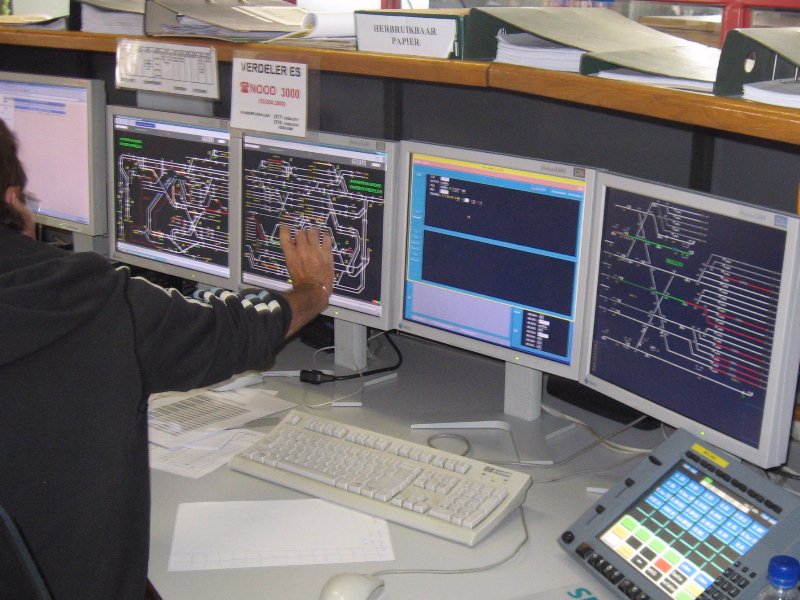
For the Signal & Telecoms dept. of a major passenger railway, we developed a research report for an executive audience describing at a functional level the command and control systems under their purview, and documented existing incident response procedures and plans for the purposes of a security audit. At the time, senior leadership were reviewing existing organizational structures, specifically regarding which hardware, software, and network maintenance functions were a core part of railway operations and maintenance, were support functions that belong in corporate I.T., or were performed by outside vendors. We were successful in establishing and documenting that the operation and maintenance of signal and power control systems, although they utilize certain commodity hardware components, were so tightly integrated with low-level embedded railway operating devices (such as vital interlocking processors, high voltage circuit breakers, and positive train control communication systems) that it would have undue negative impacts on railway operations to have a separate team responsible for their maintenance. We also demonstrated that the existing critical cyber security incident response procedures were at least as effective as those utilized by corporate I.T. security, and that the system is capable of operating with temporarily degraded functionality without compromising the safety of railway operations.
Rail Freight Solutions to Roadway Congestion: Issues Research
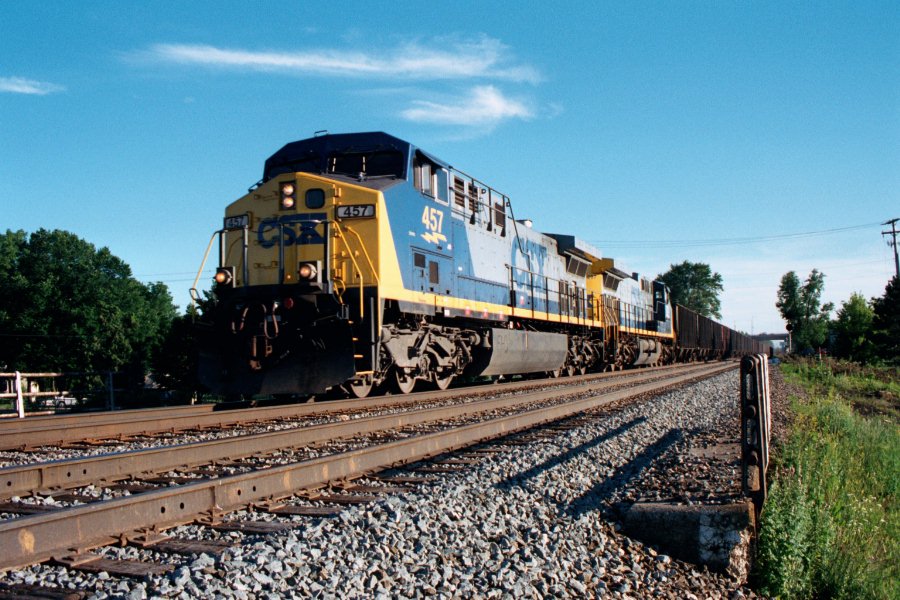 For a national transit research program, we were responsible for discovering and documenting issues involved in various different ideas that would leverage public sector investment in rail freight programs with a view towards solving highway congestion issues. As part of these projects, we essentially served as rail freight economics subject matter experts, and provided research and technical support in the following areas:
- case studies of current or proposed projects that have a public-sector rail freight investment component, which issues they have run into, and how those issues were solved;
- state-of-practice review for data sources in freight forecasting, and economic forecasting methodologies;
- innovative methods used by freight traffic forecasting practitioners to estimate the impacts of these schemes;
- methods for evaluating the benefits of railfreight investment, particularly in terms of community and environmental impacts;
- issues in shortline railroads, bulk transfer operations, transportation technology, and land-use trends.
Related Publications/Presentations:
- NCHRP 8-42 Rail Freight Solutions to Roadway Congestion
- NCHRP 8-43 Forecasting Statewide Freight Toolkit
- NCHRP 8-36 Task 43 Return on Investment on Freight Rail Capacity Improvement
Note: Alex Lu performed this work as an employee of another firm.
Management Support for Stop Elimination and Performance Initiatives
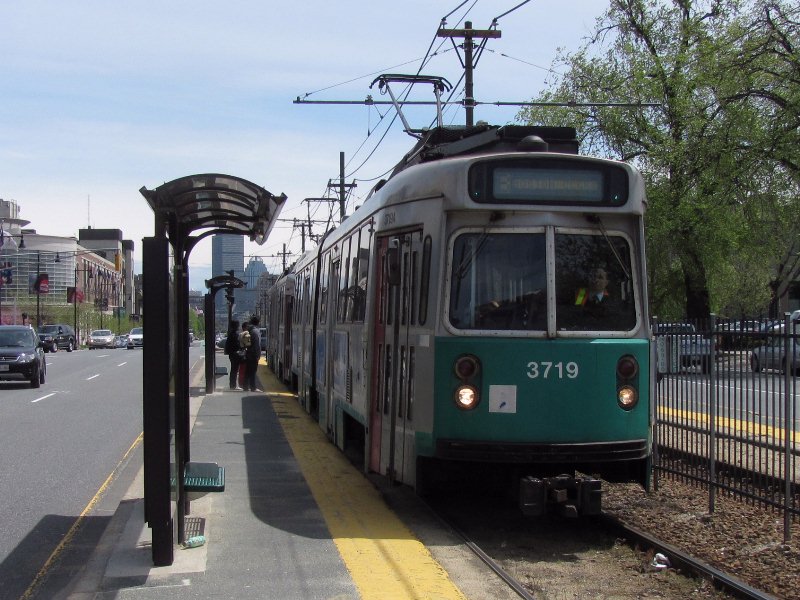
For a multi-model regional transit authority, we provided analytical and project support for a line manager who sought to accomplish two goals: eliminate several underutilized stops on a trolley line, and improve en-route timekeeping at key interchange stations. We identified the target stops to be eliminated using a composite scoring method on several criteria: daily patronage, distance to adjacent alternative stops, and proximity to major demand generators that serves limited-mobility populations. Stops that we identified were subject to a closure process beginning with six month temporary service suspension following public consultation. For on-time performance improvements, we designed schedule “paddles” similar to those carried by railroad enginemen in Asia, which provided quick reference of scheduled times at intermediate timing points. We also provided updated “simplifier” sheets to en-route supervisors (similar to a pre-printed train register), which made it easier for each supervisor to determine whether a trolley was running early or late at their location, or if an interval had been missed entirely by the departure terminal. The on-time performance initiatives proved too resource-heavy for production implementation, however, the elimination of underutilized stops did result in slight journey time improvements with minimal impact to total ridership.