
Field Thermite Rail Welding Productivity Studies
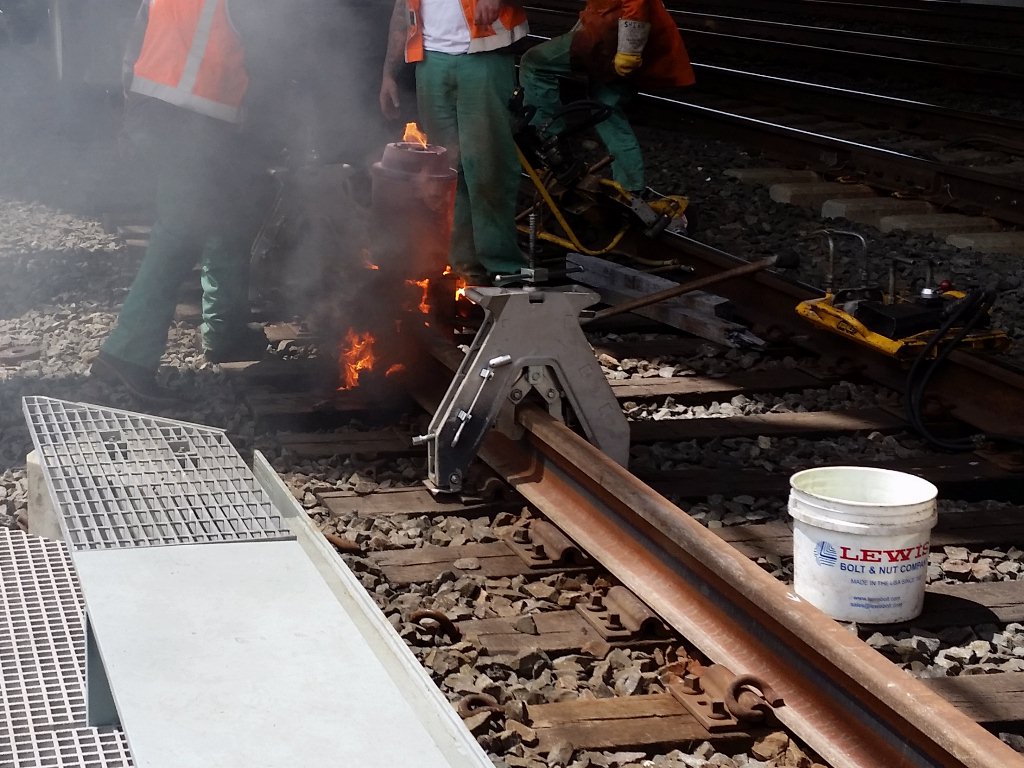 We performed an analysis of work assignments, processes, and equipment utilized by welding gangs in different districts on a major suburban railway to identify opportunities for productivity improvements using a six-sigma type methodology. The prevailing wisdom at the time was that certain welding foreman were more “productive” than others, which led to dramatically different weld count outputs per period. Through field observation and data analysis, we discovered that in fact there were many factors contributing to the differences in welding outputs: (1) certain gangs were assigned unreliable hirail equipment; (2) due to nature of their assignments, some gangs found it easier and quicker to obtain necessary track time; (3) gang productivity were much higher when multiple rail joints needed to be welded within the same signal block; (4) no formal process existed for providing replacement welding foreman or qualified welder in case of vacation or absence; (5) differences in weather between geographic regions contributed to number of days when welding gang can safely work. The minor differences in methods, equipment type, and worker habits did not materially contribute to the differences in observed rates of output*. Based on this study, we recommended that a systemwide “extra board” of welders and foremen be established to provide cover for necessary absences (which could be utilized on spare equipment as an additional gang when there were no absences), that assignments should prioritize those temporary joints within the same block and on the same track, that new hirail equipment be procured for three gangs with least reliable equipment (keeping one best set for spare), and a project be initiated for testing field electric-arc welding equipment in place of chemical “pot” welding. The new hirail equipment improved welding productivity significantly as soon as they were commissioned.
* Note: Quality of resulting welds was outside of the scope of this study.