
Using Train Movement Data for Service Management
 We led the establishment of a program at a large public transit agency to routinely utilize historical and near-real-time train movement data for a variety of ad-hoc analyses in support routine service management and special projects. At that time, a vendor had just completed a major project to connect local control towers on the newer subway lines to a central operations control center, allowing visibility of movements along with train identification from one single database. Working with the vendor and the local I.T. and Signal departments, we arranged for automated nightly export and processing of the data from the isolated rail control network, making it available for routine analysis. One of the first application of this data was to replace the manual and burdensome random sample observations for auditing en-route service reliability with automatically collected data. We also utilized the data to monitor the day-to-day variability of station dwell times during busy periods, terminal departure timeliness, maintenance track outages, and to monitor the performance impacts of major service changes. This pioneering work prompted the agency to explore more of the passively collected data that had been available within their systems, and eventually led to similar projects that took data directly from relay rooms on the older parts of the system.
Related Publications/Presentations:
Organizational Development of Innovative Functions
 For a number of railway organizations, we were responsible for either developing a brand new team to perform a specific function that had hitherto not been performed in-house, or for reviewing an existing group that has had its regular function and responsibilities transformed so fundamentally that a new organizational structure was needed for it to be effective. In one case, we took a unit that had various data-related responsibilities such as surveying, reporting, datamining, big data analytics, regulatory compliance, and quantitative model development, and reorganized it such that the routine data production activities were separated from the research and development activities, and from the I.T. support functions that provided the computer infrastructure on top of which all of those activities took place. For another group, we designed the decentralized organization that would together support the enterprise geographic information system (GIS) by recommending that a small core companywide GIS group was supplemented by designated representatives (both existing and new staff) embedded within various other functional units that would offer the more specialized skills required within their department (e.g. land surveying, demographic analysis, engineering, archiving) but also serve as liaison to the central unit. In another case, we developed an industrial engineering and resource review function from scratch. We also worked on an organization plan that distributed certain compliance responsibilities to subject matter experts within the appropriate areas with one manager serving as overall coordinator. In many of these cases, our organizational plan was implemented, usually with minor modifications, by the business. In one last case, we were tasked with documenting the workflow, roles and responsibilities, and business processes of an existing organization with many ad-hoc and miscellaneous tasks in a detailed and defensible way, to forestall efforts by outside forces to dismantle the unit. We ultimately contributed to their success in preventing that team from being broken up, and helped others achieve a better understanding of that group.
Measuring and Controlling Subway Fare Evasion
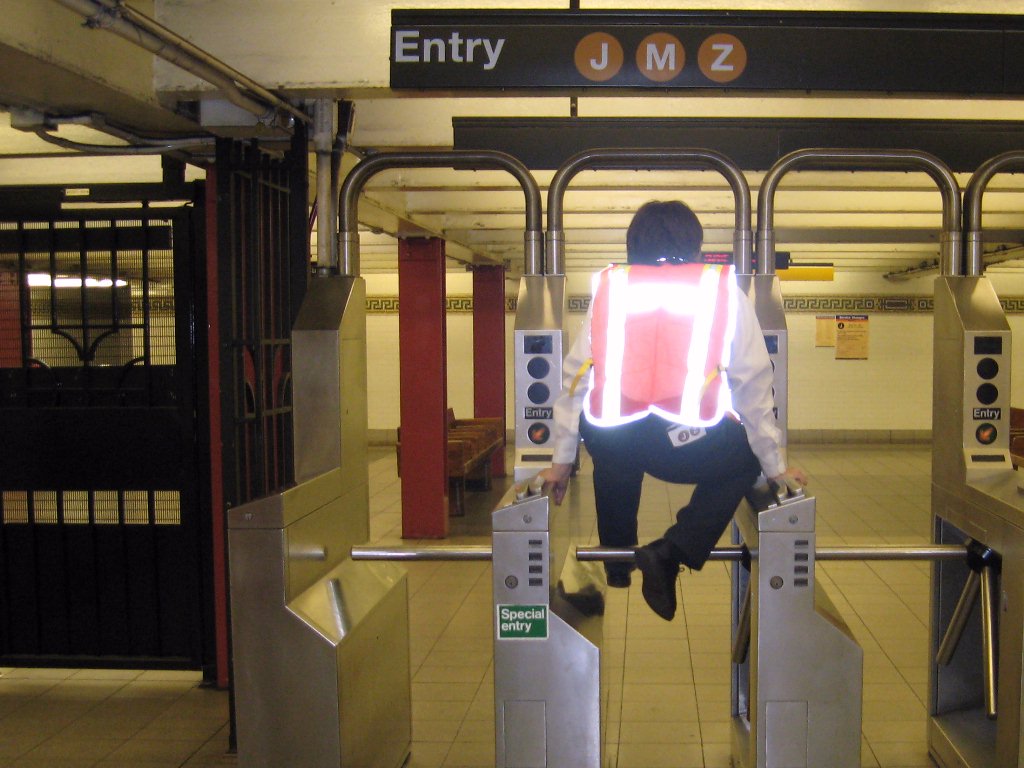 We were tasked by a major U.S. rapid transit system to determine the true rate of fare evasion at the turnstile, and assess the resulting potential revenue loss. Working in conjunction with a team of internal auditors, we adopted a stratified sampling methodology and developed methods for discreet (although not completely clandestine) observations at subway fare control areas. During this project, we discovered that the system in fact had a comprehensive pre-existing framework for managing and combating fare evasion, although it did not report any reliable statistics. The Automated Fare Collection (AFC) system actually features lessons learned from field trials of prototypes specifically designed to limit fare abuse. We found at that time the annual average subway evasion rate remained relatively low at approximately 1.3%, although there were distinct patterns by time of day, type of fare control, rider demographics, and geography. Evasion rate peaks at 3pm due to students dismissal, otherwise hovers around 0.9% peak, 1.9% off-peak. Busy times and locations have higher evasions per hour but lower evasions per passenger. More evasions occur in lower-income neighbourhoods. Staff presence apparently doesn’t reduce evasions. Perhaps counterintuitively, we recommended that fare evasion enforcement should focus on high volume stations and time-of-day to maximize deterrent effect. The transit agency implemented a continuing program to monitor the true rate of fare evasion following this audit, and addressed issues relating to fare structure, probability of enforcement action, versus fixed-penalty fines.
Related Publications/Presentations:
Bus Fare Collection System Audits
 For a large regional bus company, we performed a series of fare payment system related audits to support a number of management initiatives and special projects. In response to a perception that fare abuse is an issue on certain bus routes, we conducted systemwide measurements to estimate the rate of onboard fare evasion with a group of traffic surveyors. To ensure the systemwide rates are correct for revenue loss estimation purposes, we used a stratified sample to ensure proper geographic and temporal coverage. In conjunction with a bus rapid transit line launch featuring offboard fare payment system, we performed before and after studies of unpaid fares, to understand how the changes in fare collection mechanism has affected the rates. To support financial estimates, we designed a study to measure the dollar amounts paid by passengers who paid a partial fare using nearly exhausted farecards or insufficient cash fares. To address an allegation that limited-mobility users were not paying the correct fares, we designed a study specifically to observe wheelchair boardings, which was difficult because it is a relatively rare event widely distributed in time and space. We also designed a study using AFC system data to determine the frequency at which buses were sent from depot with malfunctioning fareboxes, resulting in no fare being collected for that trip. Following the launch of a proof-of-payment system on a bus rapid transit line, we designed a study to measure the effectiveness of the strategies utilized by onboard fare inspection team to ticket nonpaying riders, and provided recommendations on how the fare inspection teams could modify their work schedules and inspection locations to improve both capture rate and rider perception. We also set up a routine process that allowed the bus company to produce a weekly report of rolling average rates of systemwide fare evasion for monitoring by operations management.
Measuring Daily Bus Passenger Miles Using Electronic Farebox Data
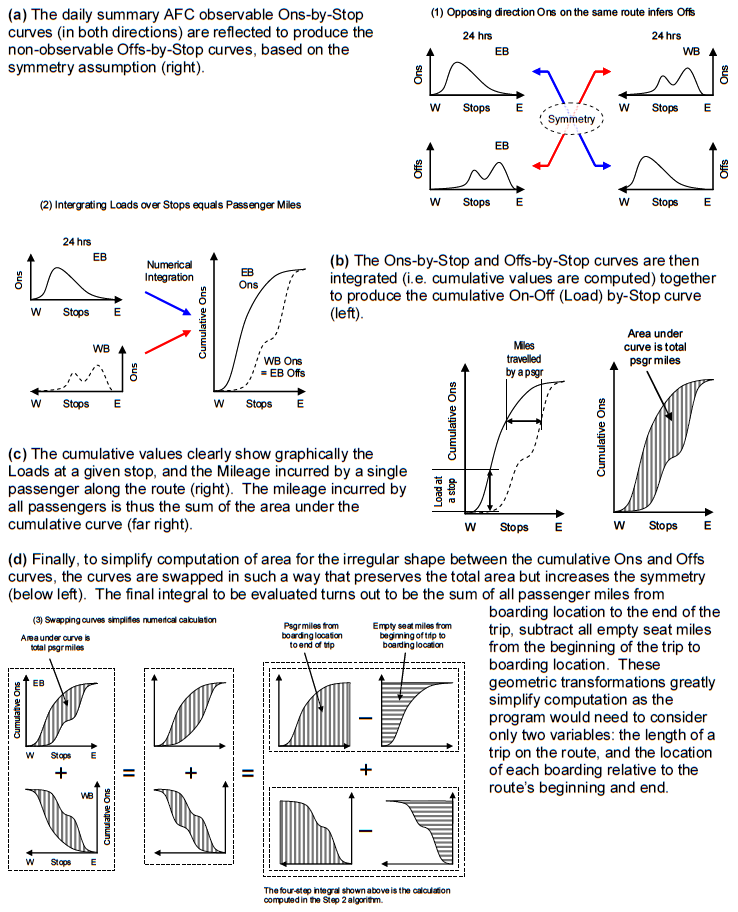 In one of the first production application for extensive analysis of “big” data in a U.S. transit agency, we designed and implemented a user-friendly computer program that automatically detected and corrected inevitable data errors in the daily Automated Fare Collection (AFC) system transaction log files, and devised an algorithm to compute actual aggregate mileage travelled by each individual bus passenger on a zero manual intervention and daily reporting basis. This method was approved by the Federal Transit Administration (FTA) as a 100% sample for bus passenger-miles for National Transit Database reporting and Federal Capital funding purposes, replacing previous labour-intensive random sample practices with higher error margins. At the time, the AFC transaction logs were not broken down by trip, no electronic bus driver sign-on data was available, and no geo-location information was available from the buses. This resulted in various heuristics being necessary to derive the required results. Since that time, the agency has progressively moved towards equipping all buses with automated passenger counters and automated vehicle location systems. However, until 100% of the fleet is fitted with entrance-exit door sensors, this farecard-based method of measuring passenger ridership and passenger-miles remains in daily production use.
Related Publications/Presentations:
Workload Study for a Critical Railway Supervisory Function
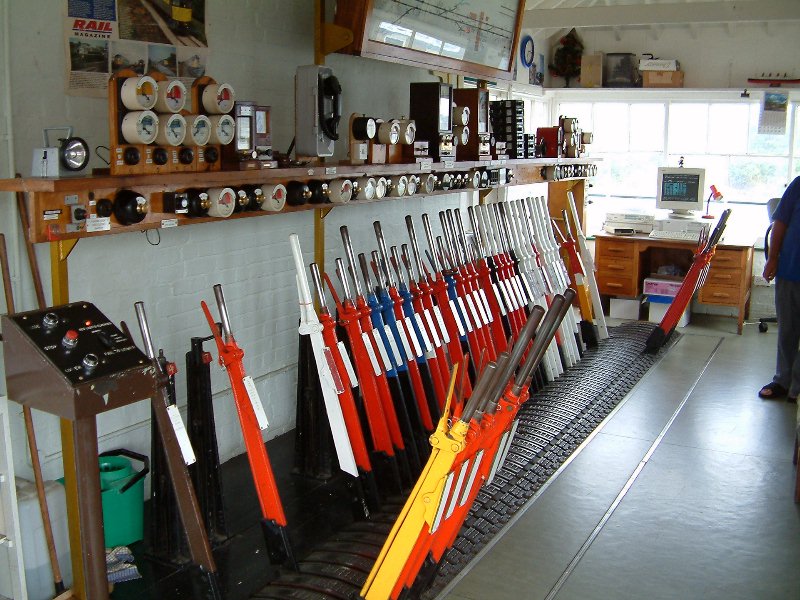
On behalf of a large metro operator, we designed a time-and-motion study using statistical sampling methodologies to determine the typical residual workload of certain field supervisors whose primary train dispatching function had been “remoted” to a centralized control center. To properly understand their workflow, we met with control center managers and reviewed their operating rules to understand their function. We also met with supervisor representatives at their work locations to ensure we capture all of the exception tasks they perform on a day-to-day basis, and factored these unusual circumstances into our study design. A team of operations managers then performed field observations on a 24/7 basis over the course of two months based on our statistical sample. Our study showed that the field supervisors, although they were actively utilized only around 30% of the time, on average several times each shift, they perform a task that could not reasonably have been performed by the train crew, which would otherwise have required a roving supervisor to be sent from another location. We also found that they fulfilled an important safety function by determining fitness-for-duty at train crew signing-on points. As a result of our study, the operations management proactively identified 40 existing messenger positions, whose function could be replaced with internal mail service, which resulted in equivalent headcount reductions.
Demographic Analyses to Inform Transit Fare Policy
 One major U.S. transit agency was proposing a significant round of fare restructuring in the face of a structural deficit, and many fare policy options were being considered. Some of these proposed fare structures involved significant increases and expected diversions of current customers between different fare products (e.g pay-per-ride tickets, discounted multi-ride tickets, and unlimited ride passes of differing durations), and an option to introduce higher peak fares was being discussed. This type of major change in fare structure was unusual in this metropolitan area and advocates were concerned about its equity impacts, as the proposals had the potential to shift the cost burden between different groups or geographic areas. We were tasked to combine existing fare media usage survey data, customer demographics data, U.S. Census data, and current farecard utilization data to determine impacts to different groups of customers, such as minority or low-income. For this assignment, we came up with two different approaches for impact analyses: a classical aggregate one based on known fare elasticities in the various markets, and an innovative disaggregate one utilizing all observed trips and individually simulating each rider’s choice of fare product based on the new fare structure and their daily travel pattern. From these results, the transit agency was able to choose a fare scenario that delivered the required revenue increases whilst minimizing impacts to protected demographics. These results were also provided to relevant authorities for establishing Title VI compliance of the fare restructuring process.
Related Publications/Presentations:
Developing Performance Measures for a New Management Framework
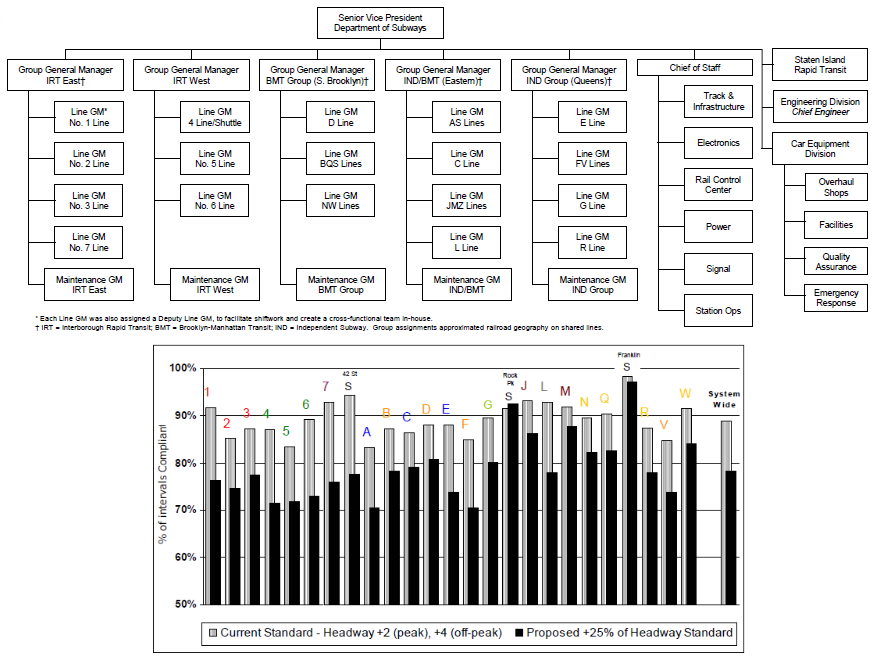 For a large public transit agency, we developed a series of aggregate performance measures using a balanced scorecard framework to support the roll-out of an operations management restructuring programme designed to provide a single point of accountability for service on each rail line. The rail lines have shared track segments where they share stations, and several lines would share major maintenance assets such as workshops. Additionally, trains may be subject to diversion onto other lines in case of operational perturbations, which in some cases are not an unusual occurrence. It was, therefore, necessary to report the composite performance of each line by allocating performance results which may be measured by station, by track segment, or for shared vehicle fleets. We developed a weighting scheme by utilizing usage statistics by line, and by utilizing existing “performance priority” data from a prior customer survey to inform which aspects of performance is more important to the customer (e.g. station cleanliness versus car reliability). This resulted in a composite performance measure which allowed overall performance of all lines to be presented in rank order. While the analytics behind the weighting scheme are not complicated, the most challenging aspect of this project was to gain acceptance of the proposed performance measures amongst the new line general managers whose performance would be so adjudicated, and we consider their acceptance of our proposal an important achievement.
Related Publications/Presentations:
International Metro Benchmarking on Governance Frameworks
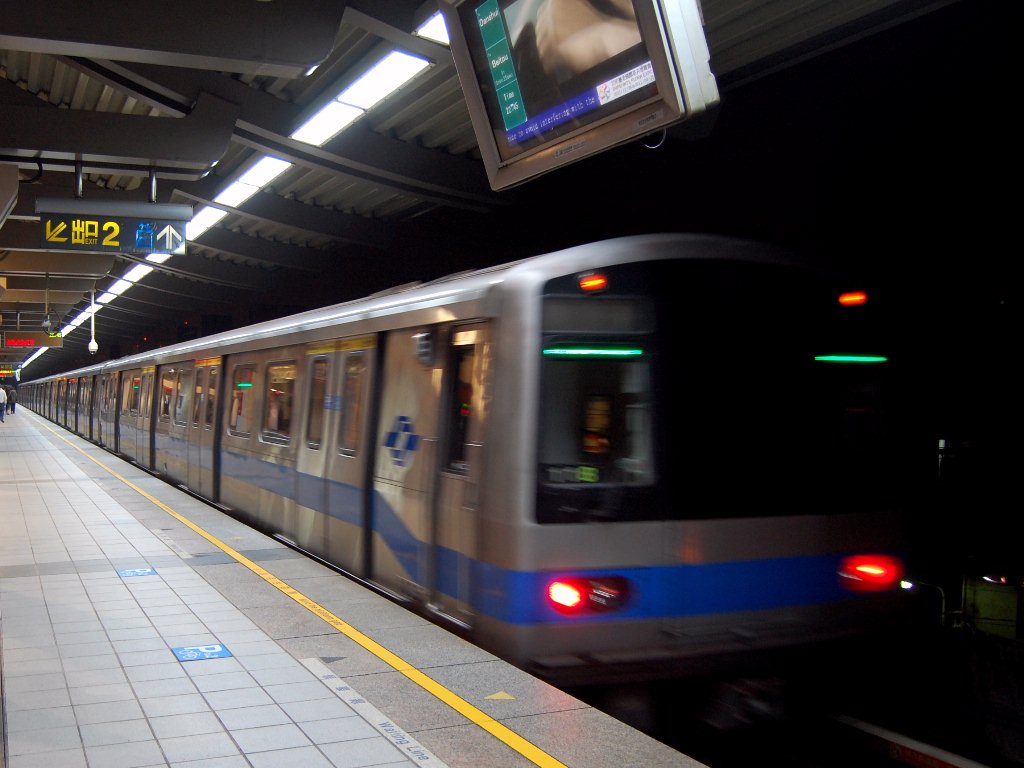 As a spin-off of a national research and training program, we were tasked to determine through publicly available information why many South East Asian transit properties visited by the program delegation have reportedly positive cash flows, i.e. are “profitable”. We found through a detailed comparative analysis of demand densities, asset utilization, regulatory frameworks, performance regimes, operating practices, and softer cultural factors that in fact only the “prudent commercial” portion of the Hong Kong Mass Transit Railway were profitable in the purest sense where farebox revenues exceeded operating expense plus the long term cost of capital renewal. In other cities, the operators are more akin to concessioned carriers or management contractors where at least some infrastructure costs were separated from the operating entity using a variety of financial devices. These systems also received various real estate grants in transactions reminiscent of U.S. “land grant” railroads and have more autonomy and commercial freedom to develop their transit-oriented property holdings. Large metro systems in the U.S. had made network design choices with consequences in density and utilization, which explain some of the higher productivities observed in Asia. We conclude that direct comparisons in performance, profitability, and productivity should be avoided unless care is taken to analyze impacts of governance, social contexts, design criteria, and reasons for these differences. Nonetheless, we believe benchmarking exercises can yield valuable insights for operations improvement under prevailing local constraints.
Related Publications/Presentations:
Transport Equity Analyses for Major Service Changes
 On behalf of a major U.S. public transit agency, we developed analytical methodologies and performed demographic analysis to determine the impact of proposed service changes on protected customer groups (minority and low-income). At that time, a large package of bus service changes was being considered, including changes in service span, route, frequency—which also resulted in specific impacts in load factors, access distance, and other performance metrics that are monitored under the agency’s own service standard and various regulatory requirements. Changes were also proposed for several rail lines. For each proposed service change action, we determined whether it met the “major service change” threshold. If it did, we determined through demographic analysis of likely users as to whether the change impacted the protected groups disproportionately. From these results, the agency was able to modify proposed service changes to avoid impacting protected groups while achieving the required cost reductions. These results were also provided to relevant authorities for establishing Title VI compliance of the service change process.
Related Publications/Presentations:
Statistical Sampling for Electronic Toll Road Transaction Audit
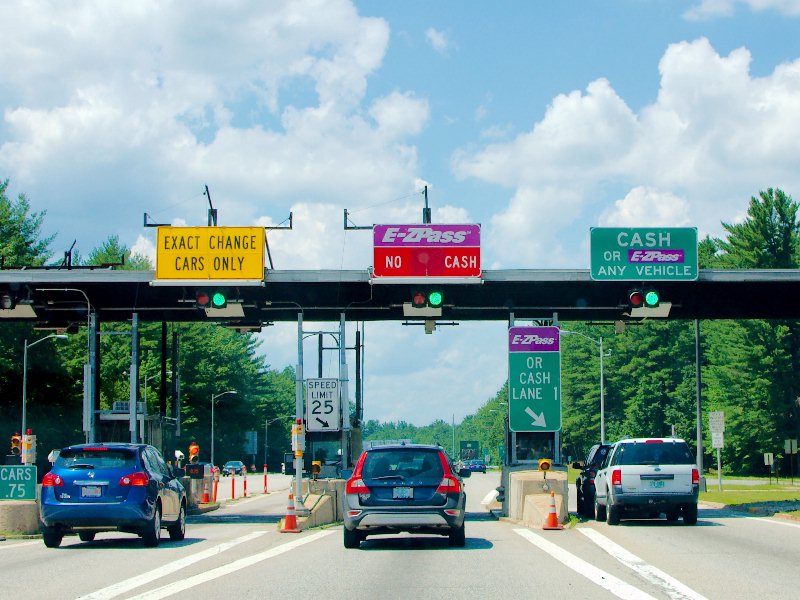
On behalf of the internal audit group at a large regional transportation agency, we designed a stratified statistical sample for determining the true rate of toll evasion on electronic RFID-based toll collection systems. The system is owned by a multi-state consortium, thus subject to interagency settlements, and billing for uncollected tolls had varying degrees of success. At the same time, the agency was actively considering gateless tolling, and thus needed to understand potential revenue losses from different types of toll evasion. Each electronic transaction selected for audit required labourous manual retrieval and review of video footage; at the same time, toll evasion is presumed to be a rare event, making its true rate difficult to determine by statistical sampling. Through the use of statistics, we minimized the number of events that required reviewing but retained confidence in the results, and helped them develop upper and lower bounds for toll evasion rates and resulting revenue losses.
Railroad Operations and Alignment Design Support
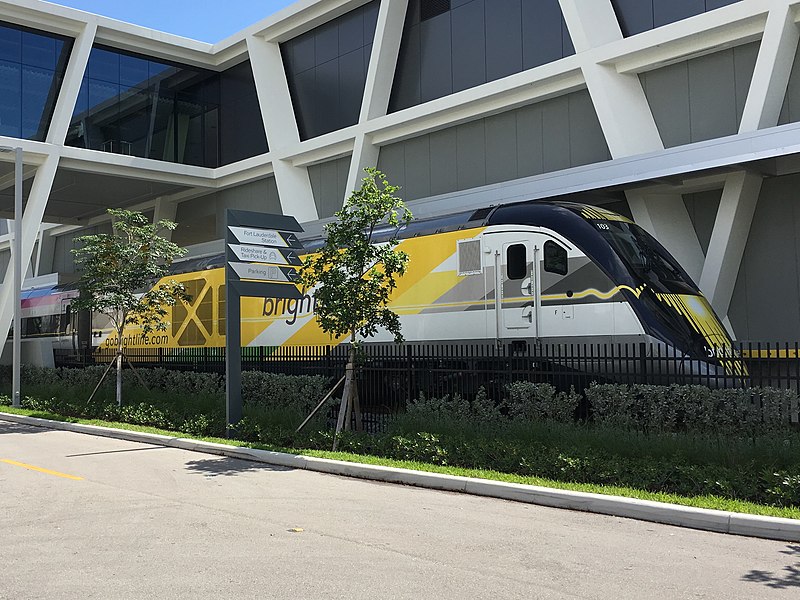
We provided specialized railroad technical support to a larger planning and engineering team that was performing an environmental impact and alternatives analysis on behalf of a state department of transportation that is contemplating several options for redeveloping a rail corridor for mixed commuter, intercity rail, and freight transportation use. Specifically, we laid out new alignment options at a conceptual engineering level to minimize property takings by re-using existing corridors. The new alignments we identified connected two parallel corridors at strategic locations to enable integrated service plans, to allow freight traffic to be routed onto a by-pass away from urban centres and reduce grade crossing risks. We also developed operating plans to show that overhead freight traffic can be routed through the area without delay while offering a robust schedule for commuter and intercity services operated under various growth scenarios. At this time, the project has been constructed, although with a substantially different form of governance and service plan than what we envisioned.
Note: Alex Lu performed this work as an employee of another firm.