
Tag: infrastructure
Signal Employee Tenure Analysis and Succession Planning

In response to a suggestion that succession planning within the Signal discipline may be an issue at one unionized transit property, we were tasked to determine the nature of the shortage and how this issue could be addressed. We examined various data sources including history of bidding and bumping, seniority lists, promotional paths, personnel action reasons, and headcount trends, and interviewed many subject matter experts (SMEs) who have day-to-day responsibilities in these areas. What we discovered was a complex picture of many different factors that contribute to this perception: at the less technical grades, training of replacement workers was keeping up with demand but there is a constant churn of personnel due to this disciplines being particularly desirable candidate for positions in other crafts with higher remuneration but requiring similar skillsets and having comparable responsibilities. Additionally, due to the general decline in quality of skilled craft training in the education marketplace, the hiring process, and low initial pay under a step system, new recruits were having a more difficult time passing the required tests, resulting in a higher failure rate. There was some movement resulting from desire to work closer to home early on in their career, but these employees, once settled down, tend to stay within their districts. At the higher technical level, there were fewer positions and they tended to be populated by high seniority employees because they are desirable positions, as a result many employees at this level have few years left to serve once they had attained these positions and completed the necessary complex technical training; therefore the retirement of each senior and highly technical employee is more noticeable to those who are responsible for ensuring that the work is covered. Our recommendation was to continue to train at the less technical level and simply create a pipeline of eligible candidates, whereas increase the position count at the higher technical levels both to provide a larger pool of qualified workers and to provide more opportunities/incentives for mid-career employees to stay within the discipline. This would also have the incidental benefit of reducing overtime costs and potential employee burn-out at the highly technical level.
Field Thermite Rail Welding Productivity Studies
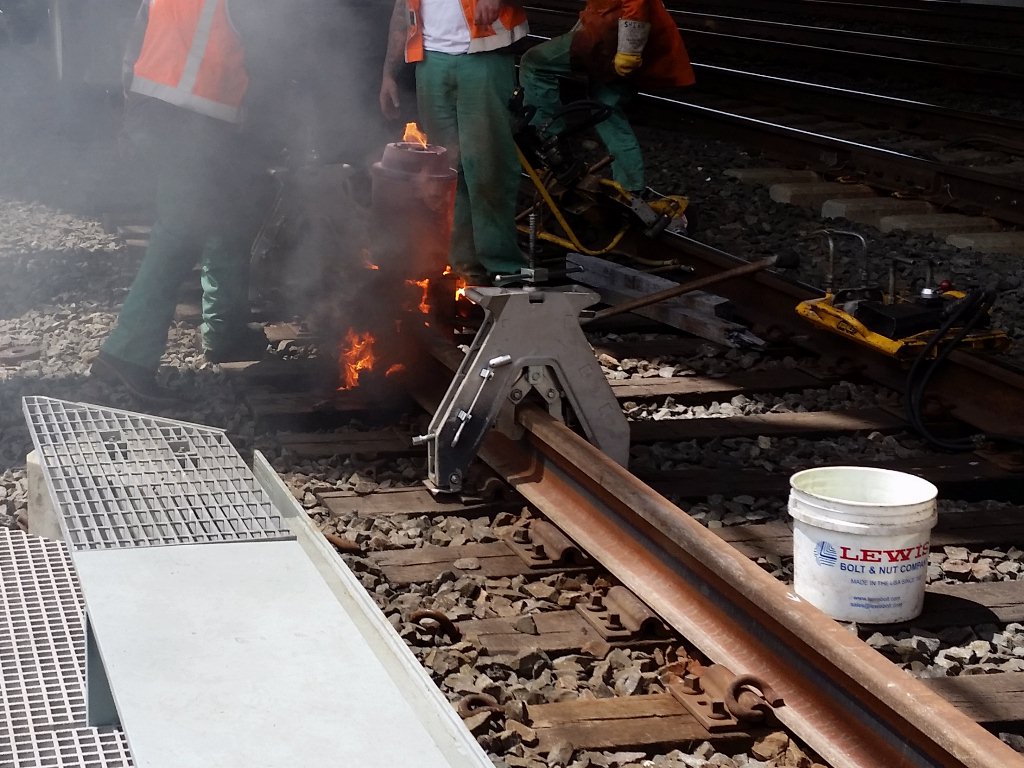 We performed an analysis of work assignments, processes, and equipment utilized by welding gangs in different districts on a major suburban railway to identify opportunities for productivity improvements using a six-sigma type methodology. The prevailing wisdom at the time was that certain welding foreman were more “productive” than others, which led to dramatically different weld count outputs per period. Through field observation and data analysis, we discovered that in fact there were many factors contributing to the differences in welding outputs: (1) certain gangs were assigned unreliable hirail equipment; (2) due to nature of their assignments, some gangs found it easier and quicker to obtain necessary track time; (3) gang productivity were much higher when multiple rail joints needed to be welded within the same signal block; (4) no formal process existed for providing replacement welding foreman or qualified welder in case of vacation or absence; (5) differences in weather between geographic regions contributed to number of days when welding gang can safely work. The minor differences in methods, equipment type, and worker habits did not materially contribute to the differences in observed rates of output*. Based on this study, we recommended that a systemwide “extra board” of welders and foremen be established to provide cover for necessary absences (which could be utilized on spare equipment as an additional gang when there were no absences), that assignments should prioritize those temporary joints within the same block and on the same track, that new hirail equipment be procured for three gangs with least reliable equipment (keeping one best set for spare), and a project be initiated for testing field electric-arc welding equipment in place of chemical “pot” welding. The new hirail equipment improved welding productivity significantly as soon as they were commissioned.
* Note: Quality of resulting welds was outside of the scope of this study.
Signal Control Centre Maintenance Staffing Assessment
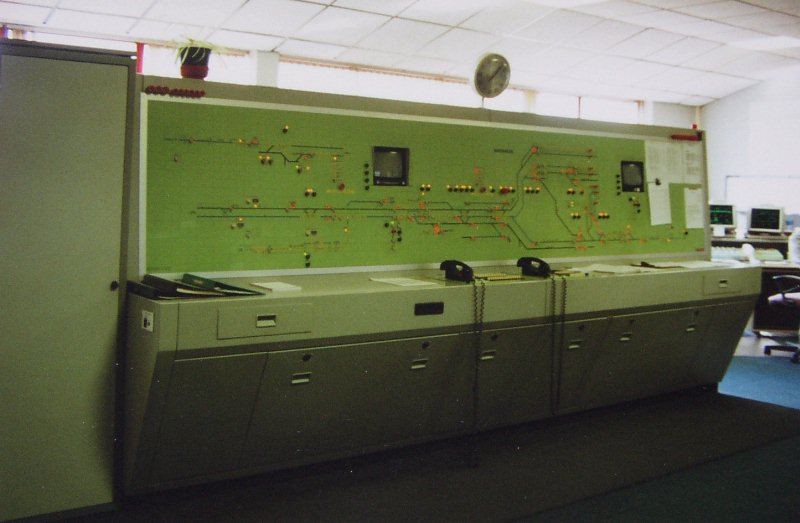
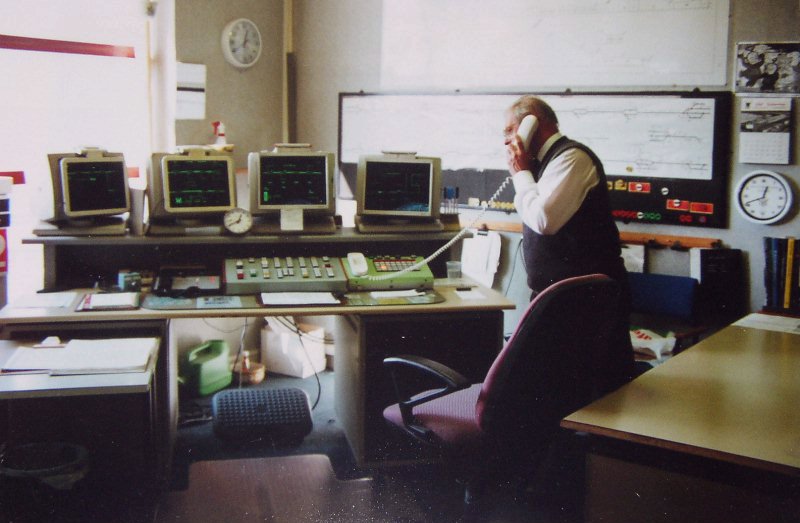 This was a challenging manpower assessment project that was difficult to perform using traditional industrial engineering methodologies due to the highly specialized nature of maintenance crafts within a control centre. The maintenance crafts were divided into different specialities where although the core skills were somewhat similar, the specific knowledge, high level of accuracy, and low latency required for attending to emergency situations essentially alone meant that it was not really possible to cross-train these highly technical employees to cover one another’s jobs. The “emergency response” nature of their jobs also meant that there will necessarily be downtime within their day if no technical faults were reported on their shift. It was simply not possible to enumerate all tasks performed and probability of having to perform that task on a given shift. We took an approach that assessed their “base workload”, that is, tasks related to preventative maintenance, and using probabilities of failures informed by historical failure data we added in the employee-hours required for emergency response, then we assigned the shifts and locations such that as much coverage was provided as possible given the resourcing constraints by assigning the preventative tasks across multiple shifts and at multiple locations (where feasible). Our analytical results formed the basis for justifying an expansion in the planned staffing levels in these highly technical disciplines because we were able to demonstrate that these sophisticated control systems required this level of manning for proper maintenance and incident coverage.
Journey Time Reduction Through Permanent Speed Restriction Review
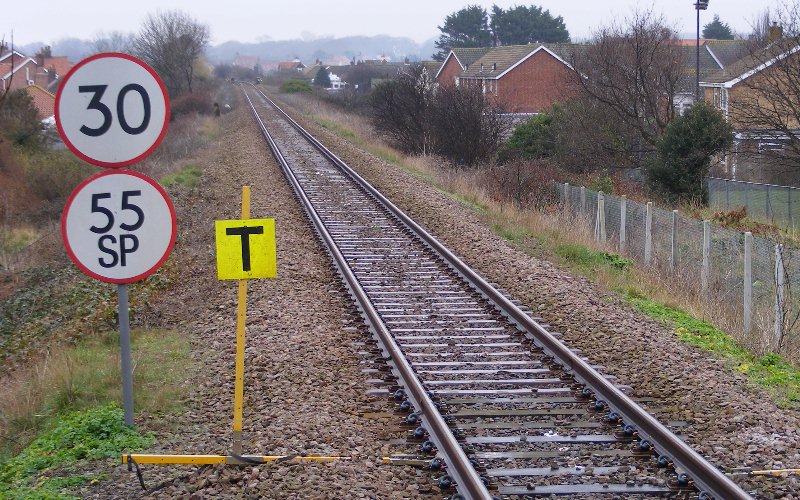
On behalf of a rail infrastructure owner, we worked with in-house track, signal, and structural engineers as well as an engineering consultant to perform a review of all permanent speed restrictions on a number of high ridership corridors. We reviewed operating documents to identify civil speed restrictions throughout the study area rail network, and by using a train performance calculator, we determined those with the most impact to journey time for non-stop express trains and for local trains. Based on the result of the traction performance study, we arranged meetings with the relevant engineering areas to discover and document the reasons for each civil speed restriction. The engineering consultant provided the top speed potential given the existing track geometry and use of exceptional cant deficiency (underbalance). On occasions, multiple constraints were discovered as having contributed to one speed restriction (e.g. clearance issues or track geometry may restrict maximum authorized speeds, but even if those were removed through e.g. track realignment and resurfacing, spacing between distant and home signals may not permit speeds to be raised above a certain level unless additional work was done to relocate existing signal heads, which could trigger a signal system redesign in high density areas.) Based on the engineering findings, order-of-magnitude cost estimates for modifying the infrastructure constraints, and number of trains affected by each restriction, we produced a prioritized list of schemes to improve journey time performance in specific corridors. This programme of speed improvements formed an input to the national route utilization strategy and a basis for negotiating cost sharing agreements with train operating companies.