
Tag: railroad
Requirements Documentation for Operations Admin Systems
 We were tasked by the engineering department of a railroad to provide requirements documents, functional design, process engineering, and project management services for two operations administration systems. The first system dealt with keeping track of position advertisements, displacements, and seniority evaluations for awards in a heavily unionized environment with multiple crafts, physical characteristics qualifications, and concurrent seniorities on multiple rosters due to promotional paths. A legacy system was in place but did not provide all required functionalities. We assessed the current system and worked out the business case for complete replacement on a modernized platform versus incremental improvements. Although an agile process could have reproduced many existing functionalities very quickly, we found that certain signal systems employees had the skills to continue to improve the legacy system, access to the source code, and compilers continued to be supported by the vendor. For all those reasons, we provided project management service to deliver the required improvements using the legacy platform. The second one is used by field supervision to record overtime approvals and provide audit compliance. We worked with subject matter experts, field supervision, and executive groups to determine system requirements and develop a process that captured all necessary information without introducing undue burden on supervisory personnel. The completed project plan was turned over to corporate I.T. and compliance groups for implementation.
Shared Use of Railroad Infrastructure: Practical Field Research
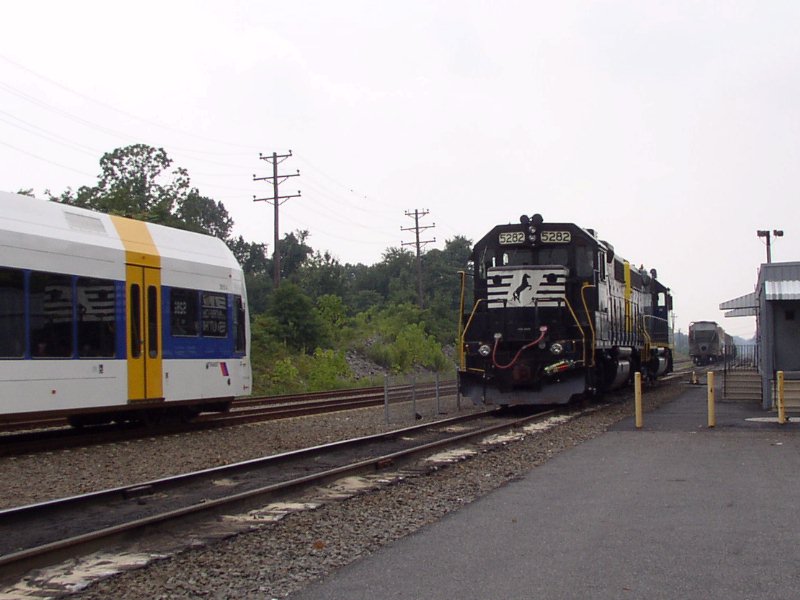 For a national transit research program, we were responsible for researching and writing a report on the shared use of railroad infrastructure by non-compliant light rail vehicles. At that time, the use of Federal Railroad Administration (FRA) waivers for operating light rail cars on general system of railroads was in its nascent years, and the concept of temporal or spatial separation was still in development. As part of this project, we visited a number of properties that have existing waivers. Through interviews with stakeholders, technical specialists, and transit managers, we determined the essential elements and conditions that allowed the system to operate safely and likely receive FRA waiver approval. We identified suitable train control technologies, their performance, costs, and operational impacts. We also determined common procedural and regulatory approaches, and methods for costsharing, staffing, and emergency recovery.
Related Publications/Presentations:
- Shared Use of Railroad Infrastructure with Noncompliant Public Transit Rail Vehicles: A Practitioner’s Guide
- Business Model for Commingled Operations of Freight and Non-FRA-Compliant Passenger Rail Services
Note: Alex Lu performed this work as an employee of another firm.
New Start Commuter Rail Feasibility Studies
O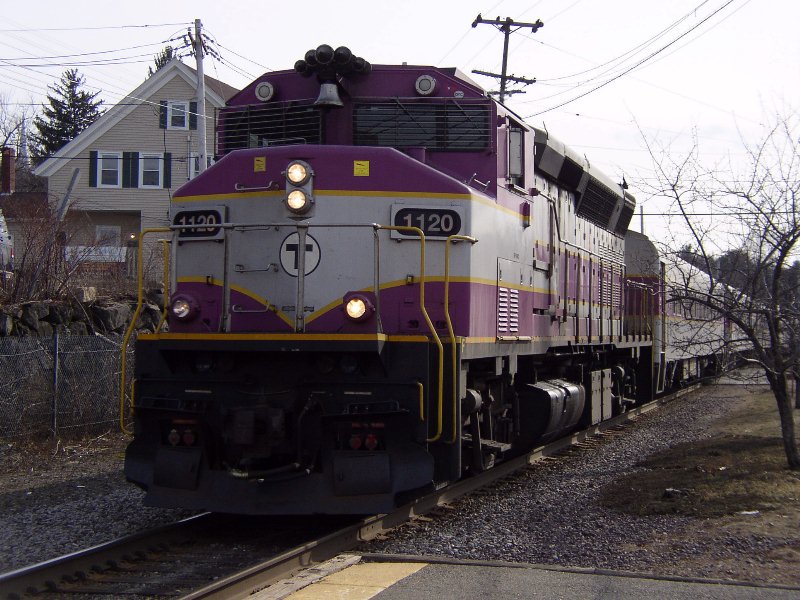 n behalf of numerous clients, we conducted pre-feasibility and feasibility studies on designated rail corridors of starting or reinstating commuter rail service. Typically a project would include:
- desktop exercise in ridership and revenue forecasting based on U.S. Census and other existing locally available data,
- defining a number of commuter rail alternatives in terms of service levels, station sites, technology, and other pertinent variables,
- order-of-magnitude estimate of required capital investment and a sketch level program based on field factfinding, and any existing infrastructure data provided by partner railroads,
- operating and maintenance cost estimate based on the service and infrastructure requirements, and prevailing rates of railway labour in the local area,
- sketch level service plan, including forecast journey times, schedules, vehicle cycles, and maintenance windows,
- assessment of local transport alternatives, including highway and other public transit options,
- review of existing local growth plans, commercial development strategy, to identify transit-supportive elements,
- preliminary review of real estate in the corridor to identify any potential acquisition difficulties, e.g. for parking,
- strategic overall assessment of likelihood in securing outside funding to initiate the capital investment scheme.
Note: Alex Lu performed this work as an employee of another firm.
Critical Incident Response in Rail Control Centers: Research
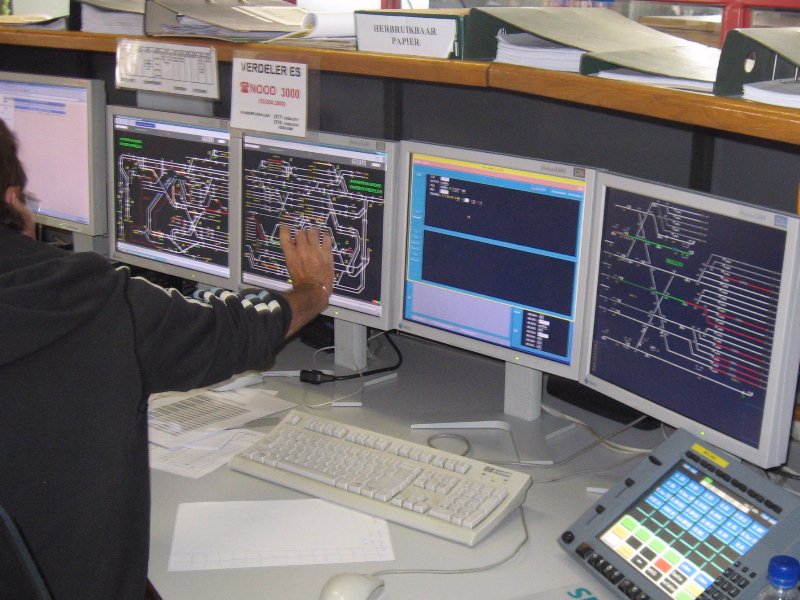
For the Signal & Telecoms dept. of a major passenger railway, we developed a research report for an executive audience describing at a functional level the command and control systems under their purview, and documented existing incident response procedures and plans for the purposes of a security audit. At the time, senior leadership were reviewing existing organizational structures, specifically regarding which hardware, software, and network maintenance functions were a core part of railway operations and maintenance, were support functions that belong in corporate I.T., or were performed by outside vendors. We were successful in establishing and documenting that the operation and maintenance of signal and power control systems, although they utilize certain commodity hardware components, were so tightly integrated with low-level embedded railway operating devices (such as vital interlocking processors, high voltage circuit breakers, and positive train control communication systems) that it would have undue negative impacts on railway operations to have a separate team responsible for their maintenance. We also demonstrated that the existing critical cyber security incident response procedures were at least as effective as those utilized by corporate I.T. security, and that the system is capable of operating with temporarily degraded functionality without compromising the safety of railway operations.
Design Charrettes for Rail Operations Support Application
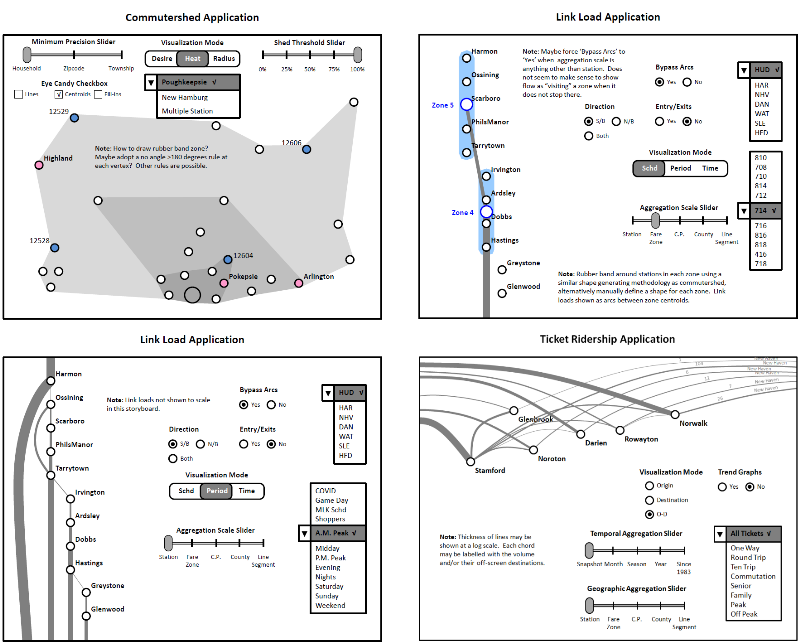 On behalf of a commuter rail agency, we provided a number of concepts and design storyboards for internal-facing operations application, and ran a series of design workshops. Some charrettes were intended to refine the user-interface design, workflow, and required business processes, whilst others were to improve buy-in amongst intended user base for a new or revised application. In all cases, we worked closely with the target user groups to ensure their concerns were addressed, and their business needs were accurately captured in the application design. For some applications, the design concepts were captured in a request for proposal (RFP) which were advertised by the agency in an open solicitation process; for others the designs needed to be fully defined to allow an in-house I.T. team to implement. The various applications we worked on include:
- internal train-tracking application for use by customer service representatives and operations supervisors,
- real estate transaction database application for use by engineering and legal personnel,
- capital as-built drawing filing system for use by capital program and maintenance of way (MOW) engineers, and
- ridership visualization application for use by operations planning and supervisory personnel.
Rail Freight Solutions to Roadway Congestion: Issues Research
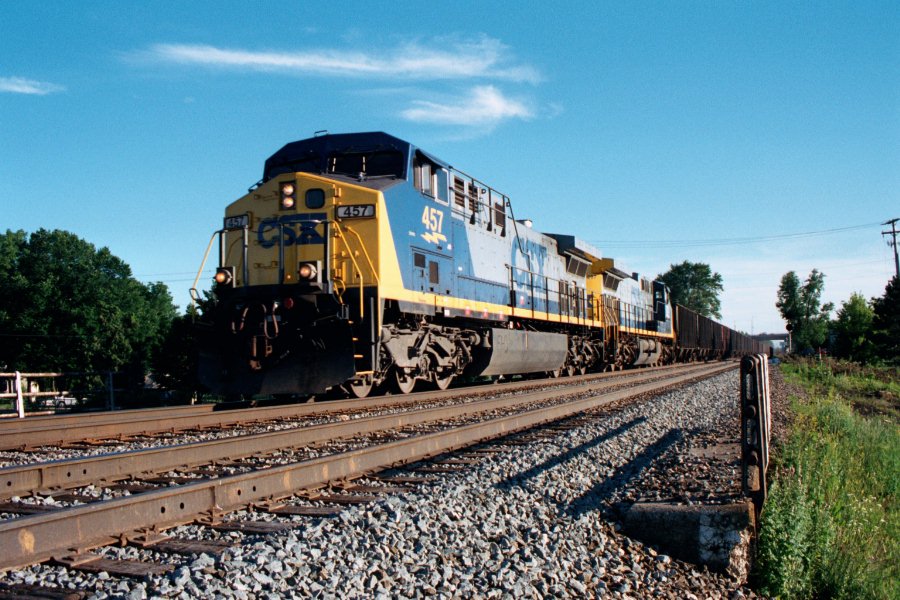 For a national transit research program, we were responsible for discovering and documenting issues involved in various different ideas that would leverage public sector investment in rail freight programs with a view towards solving highway congestion issues. As part of these projects, we essentially served as rail freight economics subject matter experts, and provided research and technical support in the following areas:
- case studies of current or proposed projects that have a public-sector rail freight investment component, which issues they have run into, and how those issues were solved;
- state-of-practice review for data sources in freight forecasting, and economic forecasting methodologies;
- innovative methods used by freight traffic forecasting practitioners to estimate the impacts of these schemes;
- methods for evaluating the benefits of railfreight investment, particularly in terms of community and environmental impacts;
- issues in shortline railroads, bulk transfer operations, transportation technology, and land-use trends.
Related Publications/Presentations:
- NCHRP 8-42 Rail Freight Solutions to Roadway Congestion
- NCHRP 8-43 Forecasting Statewide Freight Toolkit
- NCHRP 8-36 Task 43 Return on Investment on Freight Rail Capacity Improvement
Note: Alex Lu performed this work as an employee of another firm.
Freight Commodity Flow Modelling and Data Exchange Processing
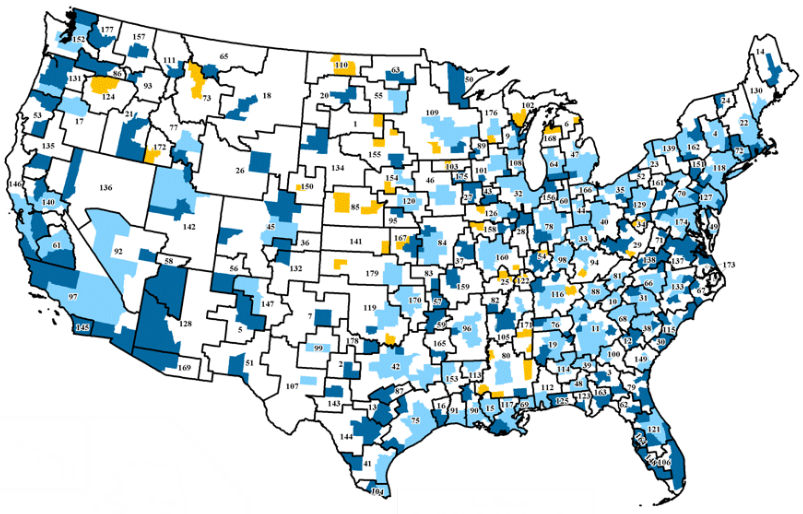 We were data scientists responsible for commodity flow modelling, traffic data processing, and manipulating huge databases for a proprietary freight market intelligence and traffic data tool. This database integrates information from various publicly-available and privately-collected data sources, and provides an overall picture of freight flows within the U.S., at a commodity and county or MSA level of detail. It is a feeder database to many statewide freight plans. To build or update this database, we started with Census data, local economic data, and public railroad waybill sample, and augmented the data with specific information gathered from a proprietary motor carrier data exchange program. Where specific information is not available, the public data is disaggregated or synthesized using established optimization methods, allocation matrices, and gravity-attraction models. We were specifically responsible for the following market segments: agriculture, coal, minerals, air freight, carrier data exchange, and barge transload sectors. We also contributed to the body of modelling knowledge by developing and/or refining new data collection and manipulation methodologies, resulting in continual improvement of the product. This proprietary tool continues to be available on a subscription basis from its owner.
Note: Alex Lu performed this work as an employee of another firm.
Strategic Plans for Rail Freight Business Development
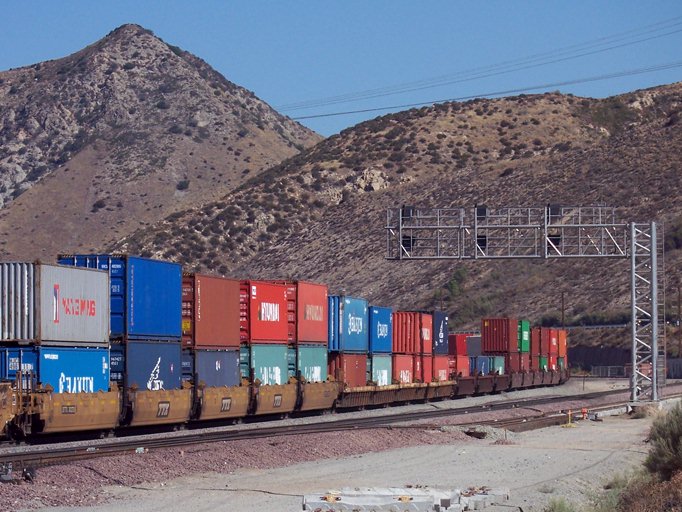
On behalf of a major truckload carrier, we worked with other consultants to develop market demand and existing supplier capacity assessments for a specialized type of intermodal rail freight transport, to determine the likelihood of success that our client would have in launching a service in this specialized market. We also provided various strategies and scenarios as to how this firm can take advantage of the known market conditions to maximize its likelihood of success. Using a proprietary database of freight commodity flows, we also identified corridors where we thought the firm could achieve a high market penetration soon after launch. For an inland port authority, we utilized a similar methodology to determine the market potential of developing an intermodal container service leveraging the port’s strategic geographic location and ready access to multiple major rail carriers. Using the same commodity flow database, we identified containerizable commodities, industrial sectors, and origin-destination lanes and markets where the port could have the best success in targeting new customers for this type of service.
Note: Alex Lu performed this work as an employee of another firm.
Route Strategies for National Rail Infrastructure Operator
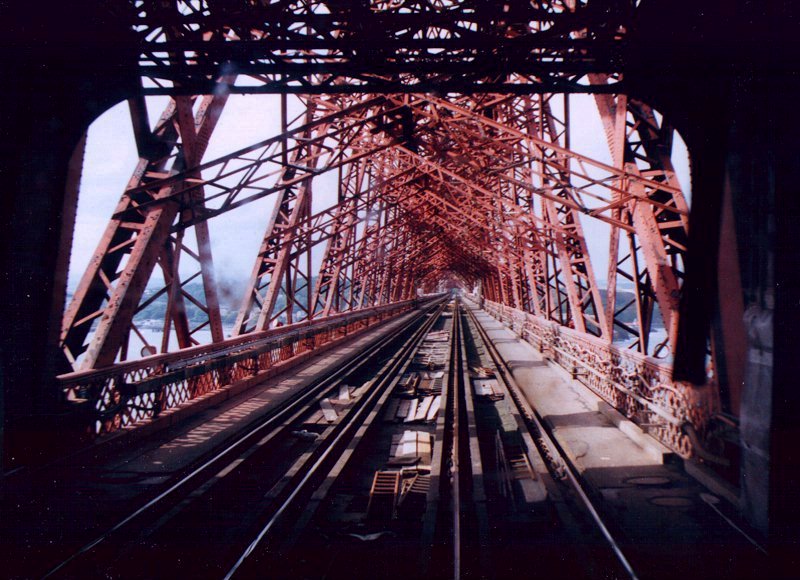 For a national rail infrastructure owner and operator, we provided analytical support to ascertain the various (route capability, route capacity, and journey time) impacts of investment in rail infrastructure on train operations. Our primary tasks included calibrating a sketch-level train-performance model using field-collected data and limited outputs from a more expensive engineering model; interpreting prevailing signalling rules and achieving an understanding of existing hardware to ascertain maximum practical and theoretical line capacity; conceptual design of alternatives for infrastructure alterations to relieve identified bottlenecks; and cash flow analyses to ensure that the proposed enhancement schemes fit within the envelope of available budget. Some of the ideas we identified have resulted in investment, although not always in the form initially envisaged. The strategic route investment planning process continues on a cyclical five-year basis.
Related Publications/Presentations:
- Network Management Statement (incorporating Route Strategy for Scotland Zone)
Signal Employee Tenure Analysis and Succession Planning

In response to a suggestion that succession planning within the Signal discipline may be an issue at one unionized transit property, we were tasked to determine the nature of the shortage and how this issue could be addressed. We examined various data sources including history of bidding and bumping, seniority lists, promotional paths, personnel action reasons, and headcount trends, and interviewed many subject matter experts (SMEs) who have day-to-day responsibilities in these areas. What we discovered was a complex picture of many different factors that contribute to this perception: at the less technical grades, training of replacement workers was keeping up with demand but there is a constant churn of personnel due to this disciplines being particularly desirable candidate for positions in other crafts with higher remuneration but requiring similar skillsets and having comparable responsibilities. Additionally, due to the general decline in quality of skilled craft training in the education marketplace, the hiring process, and low initial pay under a step system, new recruits were having a more difficult time passing the required tests, resulting in a higher failure rate. There was some movement resulting from desire to work closer to home early on in their career, but these employees, once settled down, tend to stay within their districts. At the higher technical level, there were fewer positions and they tended to be populated by high seniority employees because they are desirable positions, as a result many employees at this level have few years left to serve once they had attained these positions and completed the necessary complex technical training; therefore the retirement of each senior and highly technical employee is more noticeable to those who are responsible for ensuring that the work is covered. Our recommendation was to continue to train at the less technical level and simply create a pipeline of eligible candidates, whereas increase the position count at the higher technical levels both to provide a larger pool of qualified workers and to provide more opportunities/incentives for mid-career employees to stay within the discipline. This would also have the incidental benefit of reducing overtime costs and potential employee burn-out at the highly technical level.
Field Thermite Rail Welding Productivity Studies
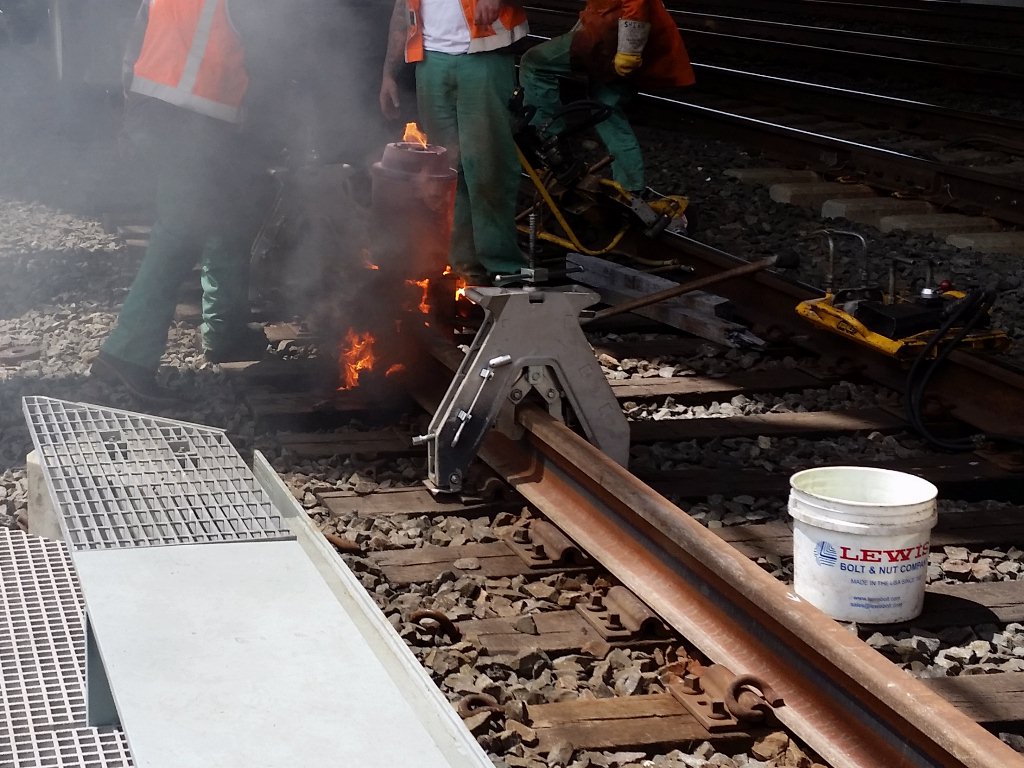 We performed an analysis of work assignments, processes, and equipment utilized by welding gangs in different districts on a major suburban railway to identify opportunities for productivity improvements using a six-sigma type methodology. The prevailing wisdom at the time was that certain welding foreman were more “productive” than others, which led to dramatically different weld count outputs per period. Through field observation and data analysis, we discovered that in fact there were many factors contributing to the differences in welding outputs: (1) certain gangs were assigned unreliable hirail equipment; (2) due to nature of their assignments, some gangs found it easier and quicker to obtain necessary track time; (3) gang productivity were much higher when multiple rail joints needed to be welded within the same signal block; (4) no formal process existed for providing replacement welding foreman or qualified welder in case of vacation or absence; (5) differences in weather between geographic regions contributed to number of days when welding gang can safely work. The minor differences in methods, equipment type, and worker habits did not materially contribute to the differences in observed rates of output*. Based on this study, we recommended that a systemwide “extra board” of welders and foremen be established to provide cover for necessary absences (which could be utilized on spare equipment as an additional gang when there were no absences), that assignments should prioritize those temporary joints within the same block and on the same track, that new hirail equipment be procured for three gangs with least reliable equipment (keeping one best set for spare), and a project be initiated for testing field electric-arc welding equipment in place of chemical “pot” welding. The new hirail equipment improved welding productivity significantly as soon as they were commissioned.
* Note: Quality of resulting welds was outside of the scope of this study.
Track Density (Tonnage) Estimation for Commuter Railroad
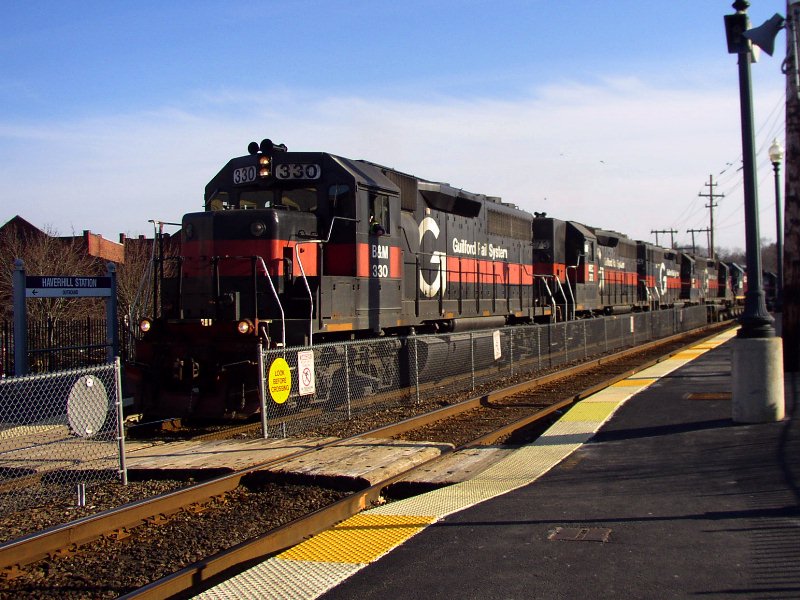 Commuter railroads do not typically consider their output in terms of million gross tons (MGTs) carried, and typically have negligible freight activity. However, tonnage estimations can be important for assessing turnout and curve rail replacement, and resurfacing needs. On behalf of an infrastructure owner of mixed-traffic trackage in a commuter district, we estimated the track density on a track and block level. Starting with electronic train movement records, we designed a heuristic to automatically filter out questionable data, and provide reasonable estimates for use in their place. This was then combined with planned train-level consist data and seated-load gross equipment weights to determine MGTs attributable to passenger trains and EMU equipment. For road freight trains, we used one year’s worth of freight train manifests to determine tonnage carried, marrying this with train movement data to determine their routing. For unit trains (that load or unload within the territory), and local trains (that pick-up and set-out loads within the territory—negligible volumes), we tracked the tonnage changes en-route where this was deemed a significant factor in the total MGT estimate. On several mainline track segments, freight MGT was found to be between 30%~35% of total MGT and a significant contributor to track wear, despite this being a very busy commuter district that only saw 4~7 road freight trains per day (compared to upwards of 800 daily commuter train-starts). This finding triggered additional management interest in freight activity.