
Tag: ridership
Inferring Commuter Rail Ridership from Ticket Sales Data
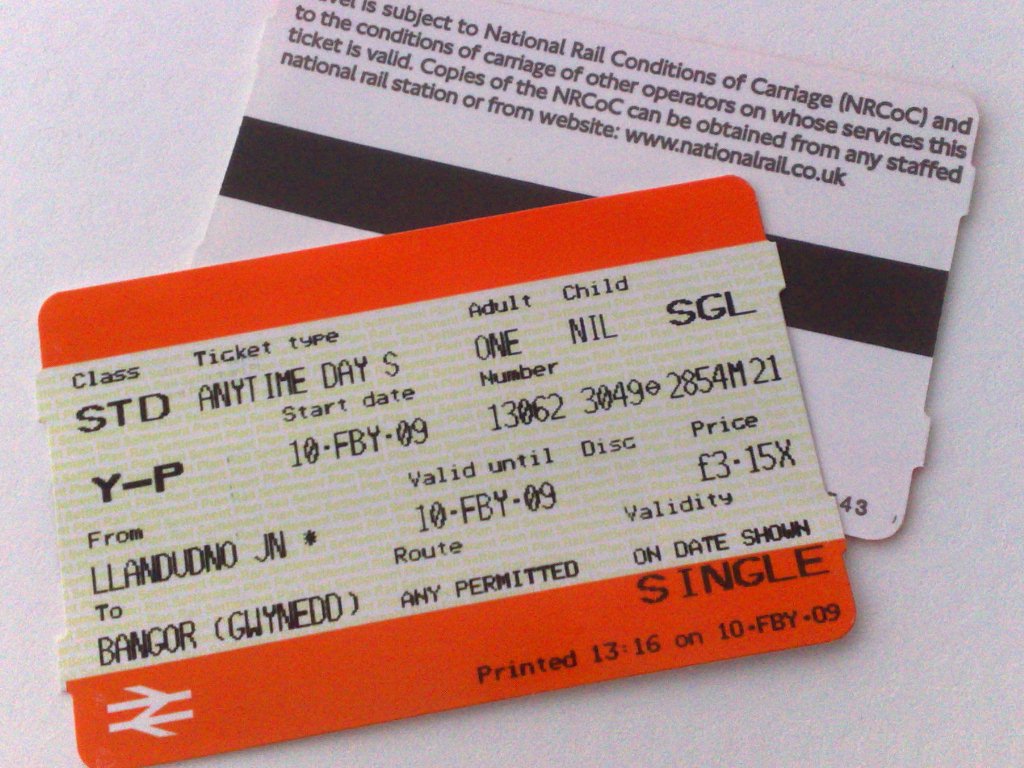 We were tasked by a major commuter rail operator to analyze ticket sales data to determine ridership with origin-destination and time-of-day detail. The operator had four distinct sales channels: mobile ticketing, paper ticket vending machines, monthly direct-mail ticket subscriptions, and on-board sales by train crew. The mobile ticket platform generated the most extensive data, including an activation record each time a periodic pass product or multi-ride carnet was activated. However, this data has a significant sync lag and has only 40% of total market share. The other sales channels provide only point-of-sale data and not point-of-use. We developed a set of working assumptions and built a model that enabled the statistical utilization patterns implied by the mobile ticket users to be applied to the data generated by other sales channels, thereby providing a daily estimate of fifteen-minute resolution ridership demand by origin-destination pairs, a high level of granularity for service planning analysis. However, due to customer-held inventory of multiple-ride paper tickets, previous three months’ worth of paper ticket sales data was necessary to generate ridership estimates for a single day.
Related Publications/Presentations:
Business Case for Friday Exception Schedules in Urban Transit
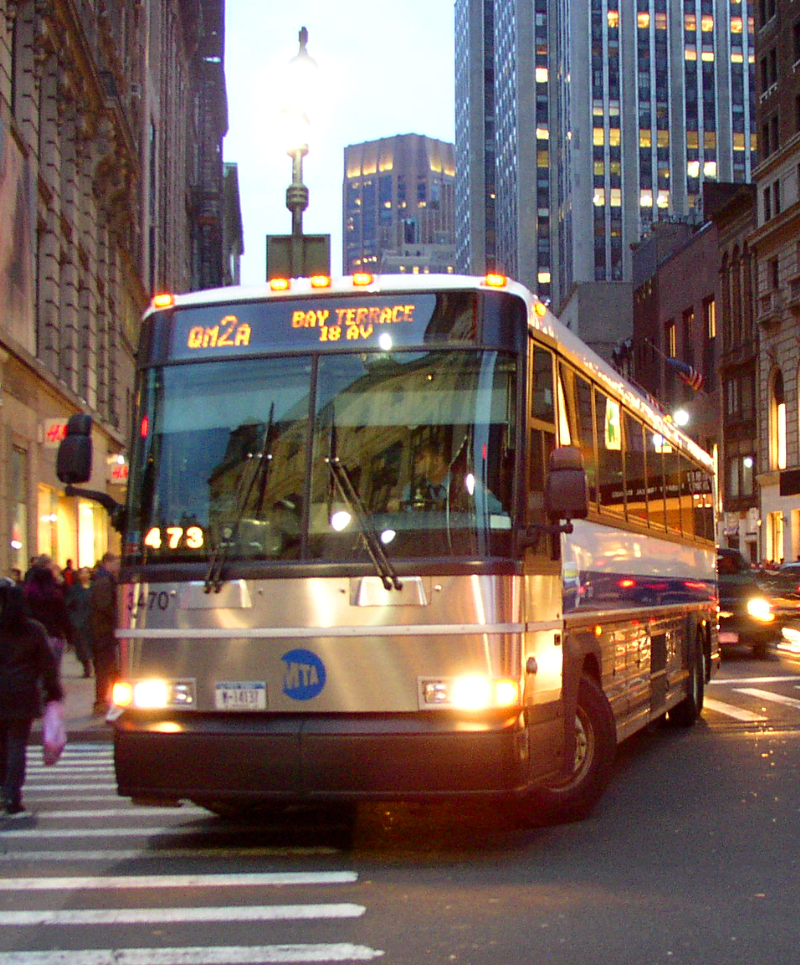 For a major regional transit authority, we developed a strategic business case for providing separate baseline schedules on Fridays distinct from other weekdays due to significantly different time-of-day and geographical ridership patterns. At that time, regular commuters were trending towards more flexible work scheduling, telecommuting arrangements, and 4½-day weeks especially in the summer, and we observed from Automated Fare Collection (AFC) data that the gaps between midweek and Friday ridership have widened. These Friday exception schedules are not unusual: transit operators ran full Saturday lunchtime rush-hours in the interwar years, while private bus companies, airlines, and freight railroads operate many exceptions today. They can help the operator better match service supply to passenger demand. We found through longitudinal analysis of data that more regular commuters skipped Friday’s trip than other weekdays’. Detailed analysis for 14 representative routes revealed 4.7% lower ridership on Fridays, potentially allowing 7.4% reductions in vehicle-hours operated. Available savings were route-specific, with 25% service reductions possible on some, whereas 25% service fortification was required on leisure-heavy routes having increased Friday ridership. We estimated that implementing separate Friday base schedules systemwide could provide an annual surplus of $10~$17 million for reinvestment elsewhere in the network. From a crewing perspective, we found that the resulting reduced Friday crew requirements could lead to an 1.8% increase in desirable weekend-inclusive regular days-off rosters, and 2.4% reduction in non-preferred midweek days-off rosters. Our recommendation was for the continued implementation of a computerized run-cutting system, and creation of routine analytical processes for multi-variate ridership analysis allowing differences across days, routes, time periods, and other variables to be determined, which together will form the prerequisites for implementing a separate Friday base schedule.
Related Publications/Presentations:
Measuring Daily Bus Passenger Miles Using Electronic Farebox Data
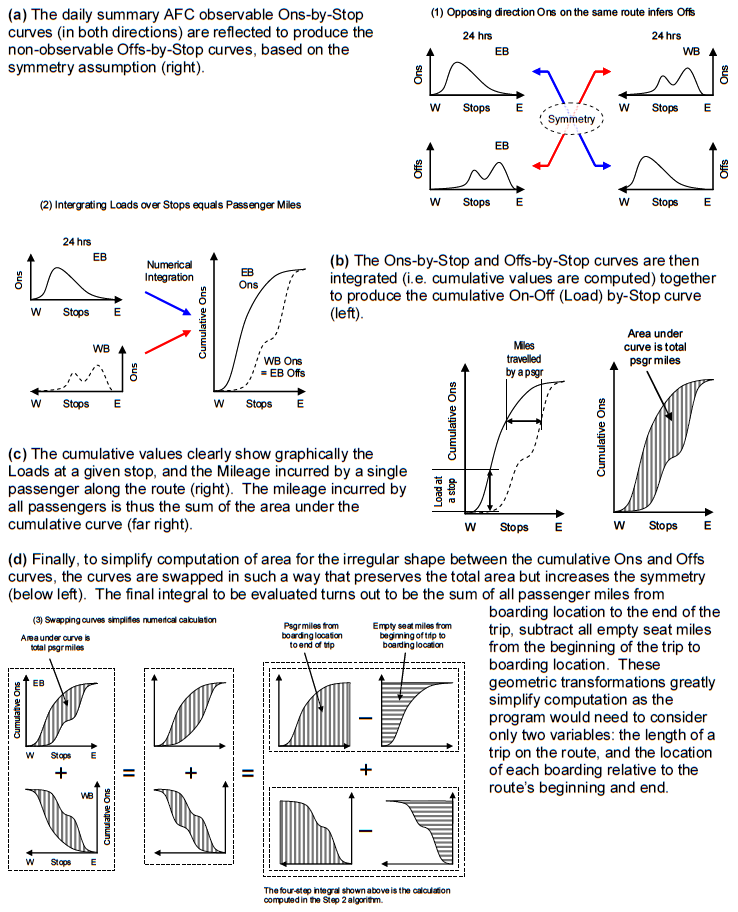 In one of the first production application for extensive analysis of “big” data in a U.S. transit agency, we designed and implemented a user-friendly computer program that automatically detected and corrected inevitable data errors in the daily Automated Fare Collection (AFC) system transaction log files, and devised an algorithm to compute actual aggregate mileage travelled by each individual bus passenger on a zero manual intervention and daily reporting basis. This method was approved by the Federal Transit Administration (FTA) as a 100% sample for bus passenger-miles for National Transit Database reporting and Federal Capital funding purposes, replacing previous labour-intensive random sample practices with higher error margins. At the time, the AFC transaction logs were not broken down by trip, no electronic bus driver sign-on data was available, and no geo-location information was available from the buses. This resulted in various heuristics being necessary to derive the required results. Since that time, the agency has progressively moved towards equipping all buses with automated passenger counters and automated vehicle location systems. However, until 100% of the fleet is fitted with entrance-exit door sensors, this farecard-based method of measuring passenger ridership and passenger-miles remains in daily production use.
Related Publications/Presentations:
New Start Commuter Rail Feasibility Studies
O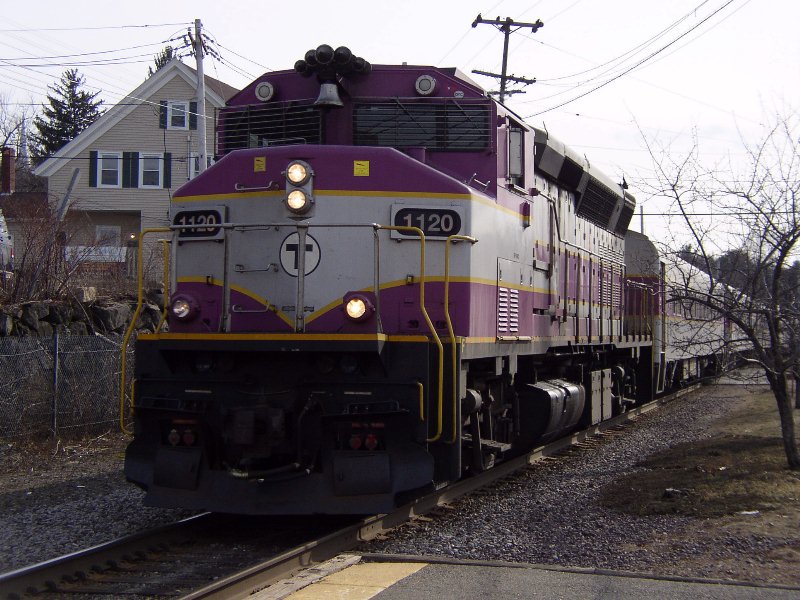 n behalf of numerous clients, we conducted pre-feasibility and feasibility studies on designated rail corridors of starting or reinstating commuter rail service. Typically a project would include:
- desktop exercise in ridership and revenue forecasting based on U.S. Census and other existing locally available data,
- defining a number of commuter rail alternatives in terms of service levels, station sites, technology, and other pertinent variables,
- order-of-magnitude estimate of required capital investment and a sketch level program based on field factfinding, and any existing infrastructure data provided by partner railroads,
- operating and maintenance cost estimate based on the service and infrastructure requirements, and prevailing rates of railway labour in the local area,
- sketch level service plan, including forecast journey times, schedules, vehicle cycles, and maintenance windows,
- assessment of local transport alternatives, including highway and other public transit options,
- review of existing local growth plans, commercial development strategy, to identify transit-supportive elements,
- preliminary review of real estate in the corridor to identify any potential acquisition difficulties, e.g. for parking,
- strategic overall assessment of likelihood in securing outside funding to initiate the capital investment scheme.
Note: Alex Lu performed this work as an employee of another firm.
Transit Plan for Major Property Redevelopment
 On behalf of a major institutional developer, we worked with a team of consultants to develop a custom trip generation and modal split model to predict the traffic and transit impacts of building out a 9.5 million square feet development over the next 30-50 years on the site of an existing freight rail yard and nearby underutilized sites. The developer’s stated goal was to minimize the automobile traffic impacts by diverting as much of the trips to transit as possible, and to convert some of these commuting trips to internal trips by building housing on-site and providing transit subsidies in lieu of parking spaces. We developed a number of scenarios based on the existing masterplan, developer’s inputs, and various assumptions about economic growth and the timing and programming of major construction projects. For some scenarios, we developed a detailed public transit plan, including projections on where within the metro area the development is likely to attract commuter and non-commuter trips, how these trips are best served by both existing public transit options and future transit investments that may progress independently of this development. Additionally, we developed proposals for re-routing of existing public bus routes and entirely new private bus shuttles that would serve this development, which would connect this area to the rest of the city.
Note: Alex Lu performed this work as an employee of another firm.